

 News
News  Coin Information
  About us
  Customer Service


 Add as a preferred source on Google
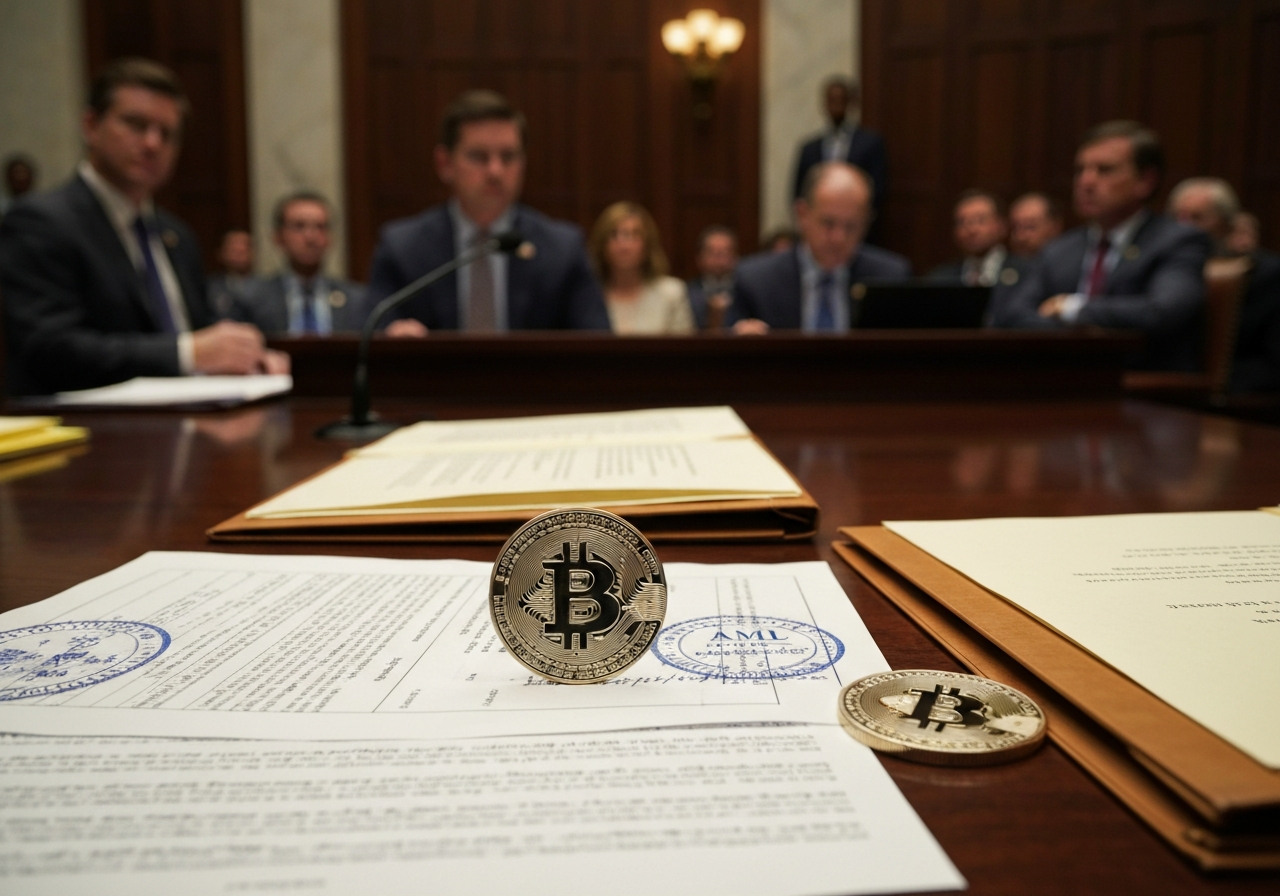
U.S. prosecutors are moving to seize more than $25 million in cryptocurrency tied to a network of international investment scams, underscoring Washington’s escalating push to disrupt cross-border fraud rings and their laundering pipelines.
In a statement released Tuesday ET, the U.S. Department of Justice said federal authorities have initiated forfeiture proceedings covering crypto assets recovered in connection with five cases linked to schemes believed to have targeted victims in the United States and Canada. The actions were announced by the U.S. Attorney’s Office for the District of Columbia, which credited the U.S. Secret Service’s Washington Field Office and its Cyber Fraud Task Force with identifying multiple money-laundering groups during the investigations.
Investigators believe the broader operation harmed thousands of victims worldwide who were led to believe they were making legitimate cryptocurrency investments. The forfeiture effort is aimed at cutting off the financial infrastructure that enables these scams—particularly the conversion of victim deposits into assets that can be rapidly moved across wallets, chains, and jurisdictions.
The largest single matter stems from a case first detected by Canadian authorities in late 2024. U.S. investigators said they traced more than 270 suspicious transactions and are seeking forfeiture of roughly $10.4 million in associated crypto.
A second case centers on an online romance scheme, a category often referred to as a 'romance scam,' in which scammers build trust before steering victims toward bogus investment platforms or wallet transfers. Prosecutors said the case involves more than 200 victims, with about $12.1 million in crypto identified for forfeiture.
The third and fourth matters were opened following victim reports filed in the Washington, D.C. metropolitan area in March 2026 and May 2026, respectively. Prosecutors said they are pursuing forfeiture of approximately $2.4 million in one case and about $1.2 million in the other, reflecting the continued prevalence of retail-facing crypto fraud even as enforcement attention has broadened to include large-scale laundering networks.
The fifth case involves a follow-on scam in which criminals allegedly demanded fees under the pretense of helping victims recover stolen funds—an increasingly common form of 'secondary fraud' that compounds initial losses. Prosecutors said around $285,000 in crypto is subject to forfeiture in that matter.
Across all five cases, prosecutors said the laundering groups’ key operational hubs were concentrated in Southeast Asia, while relevant internet protocol (IP) addresses were observed in China, Malaysia, and Cambodia. The geographic footprint aligns with a broader pattern seen in major crypto-fraud investigations, where victim acquisition occurs online in North America and Europe while laundering and operational coordination are conducted through overseas networks designed to frustrate law enforcement.
The Justice Department said the seizures represent a recent outcome of the 'Scam Center Strike Force,' an initiative launched in November 2025 by U.S. Attorney Jeanine Pirro, which prosecutors said has helped recover more than $800 million in criminal proceeds to date. Pirro called the $25 million forfeiture effort a direct result of the strike force’s work, arguing it highlights the effectiveness of targeted investigations focused on dismantling laundering structures and interrupting the flow of illicit funds.
The forfeiture cases also come as crypto markets continue to grapple with the reputational impact of high-volume fraud. While blockchain transparency can aid tracing, prosecutors and investigators have repeatedly pointed to the speed of on-chain transfers, the use of layered wallets, and cross-border cash-out channels as persistent challenges. U.S. officials said the current actions demonstrate a strategy centered not only on identifying scams, but on disrupting the 'money movement' networks that keep them profitable.
🔎 Market Interpretation
- Enforcement-led headwind for illicit liquidity: The DOJ’s move to forfeit $25M+ in crypto signals tighter pressure on scam-related cashflow and laundering routes, raising operational risk for fraud rings and the intermediaries they rely on.
- Cross-border risk remains structural: Cases spanning the U.S./Canada with laundering hubs in Southeast Asia (IP links to China, Malaysia, Cambodia) highlight that jurisdictional complexity is still a core factor shaping crypto fraud—and the regulatory response.
- Tracing improves, cash-out remains the choke point: Authorities emphasize blockchain transparency for tracing, but note persistent challenges from rapid on-chain transfers, layered wallets, and cross-border off-ramps; this suggests enforcement will increasingly target exchanges, OTC brokers, and mule networks facilitating conversion.
- Reputation overhang on crypto adoption: High-volume scam activity continues to weigh on consumer trust; recurring headlines of large forfeitures may push platforms toward stronger compliance, monitoring, and user-protection tooling.
💡 Strategic Points
- Follow the laundering infrastructure, not just the scam front-ends: DOJ frames the strategy as disrupting “money movement” networks—implying more actions against wallet clusters, mixers-like layering behavior, and coordinated laundering groups.
- Five-case breakdown clarifies scam typologies:
- Case 1: Canadian-led detection (late 2024), 270+ suspicious transactions, about $10.4M targeted for forfeiture.
- Case 2: Romance scam funneling victims into bogus investments; 200+ victims; about $12.1M identified.
- Case 3: D.C.-area victim report (Mar 2026); about $2.4M pursued.
- Case 4: D.C.-area victim report (May 2026); about $1.2M pursued.
- Case 5: “Recovery” follow-on scam (secondary fraud); about $285K pursued.
- Victim impact is large-scale: Investigators estimate thousands of victims worldwide, reinforcing that retail-targeted fraud remains substantial even as authorities prioritize network-level laundromats.
- Strike-force model is expanding: The “Scam Center Strike Force” (launched Nov 2025) is credited with $800M+ recovered to date, indicating sustained resourcing and likely continued forfeiture actions.
- Practical risk controls for users and platforms:
- Be skeptical of unsolicited investment offers, especially those originating from dating/social channels.
- Watch for red flags: pressure to “top up,” guarantees of returns, and instructions to move funds across multiple wallets/chains.
- Ignore paid “recovery” services demanding upfront fees—often a second scam.
- Platforms can reduce exposure via enhanced transaction monitoring, scam-intel sharing, and friction for high-risk withdrawals.
📘 Glossary
- Forfeiture proceedings: Legal process where the government seeks permanent seizure of assets allegedly tied to criminal activity.
- Money laundering groups: Organized actors who specialize in moving and obfuscating illicit funds through wallets, chains, intermediaries, and cash-out routes.
- Romance scam: Fraud in which criminals build a relationship online to gain trust and then induce victims to send money or crypto, often via fake investment platforms.
- Secondary fraud / recovery scam: A follow-on con targeting prior victims by claiming stolen funds can be recovered—typically in exchange for fees.
- Layered wallets: Use of many sequential addresses and transfers to obscure the origin and destination of funds.
- Cross-chain transfers: Moving value between different blockchains, often to complicate tracing.
- Off-ramp / cash-out channel: Method of converting crypto back to fiat (e.g., exchange withdrawal, OTC broker), frequently exploited by laundering networks.
- Cyber Fraud Task Force: Specialized law-enforcement group focused on identifying and disrupting online financial crime networks.














Comment 0