

 News
News  Coin Information
  About us
  Customer Service




The House Financial Services Committee convened Wednesday to examine the growing momentum behind securities tokenization, signaling a pivotal shift in how U.S. financial markets may operate in the near future. Lawmakers across party lines largely agreed that tokenized securities must be subject to the same regulatory standards as traditional financial instruments — a stance aligned with SEC Chairman Paul Atkins, who has indicated the agency is preparing formal rule proposals on crypto policy.
Committee Chairman French Hill acknowledged that the financial landscape is on the verge of a major transformation, emphasizing that market integrity must be preserved regardless of what technology is adopted. The hearing treated tokenization less as a distant concept and more as an oncoming reality that regulators must actively prepare for.
Democratic members raised several concerns, including the risks of anonymous digital wallets potentially concealing foreign ownership, insufficient know-your-customer protocols, and the challenges of overseeing decentralized finance platforms. Representative Maxine Waters also warned that faster, always-on tokenized trading could accelerate the gamification of investing, stripping away protections retail traders currently rely on.
Industry advocates, including Blockchain Association CEO Summer Mersinger and SIFMA's Ken Bentsen, argued that tokenization streamlines trading by eliminating costly intermediaries, while stressing that new entrants should be held to the same regulatory standards as legacy firms. Mersinger encouraged an iterative approach from the SEC to advance policy efficiently.
Major players in the financial sector are already moving forward — BlackRock's Larry Fink recently championed tokenization's potential to modernize financial infrastructure, while Franklin Templeton and Invesco both secured significant tokenization partnerships this week.
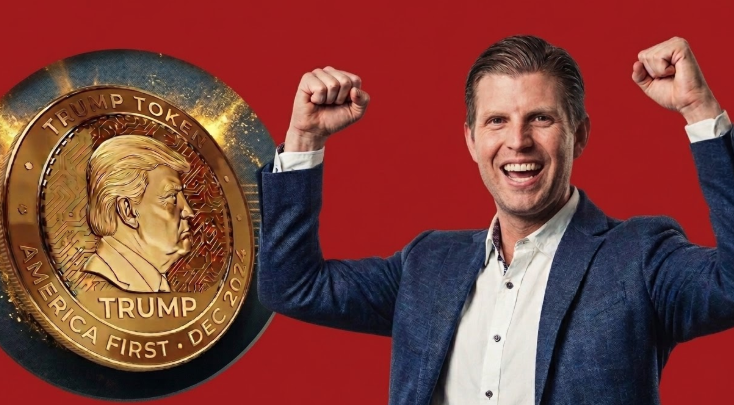
However, Democrats also raised conflict-of-interest concerns tied to the Trump family's estimated $1 billion in crypto earnings, questioning whether administration-backed rulemaking could genuinely serve public interest when officials may personally benefit from the industry they regulate.















Comment 0