

 News
News  Coin Information
  About us
  Customer Service



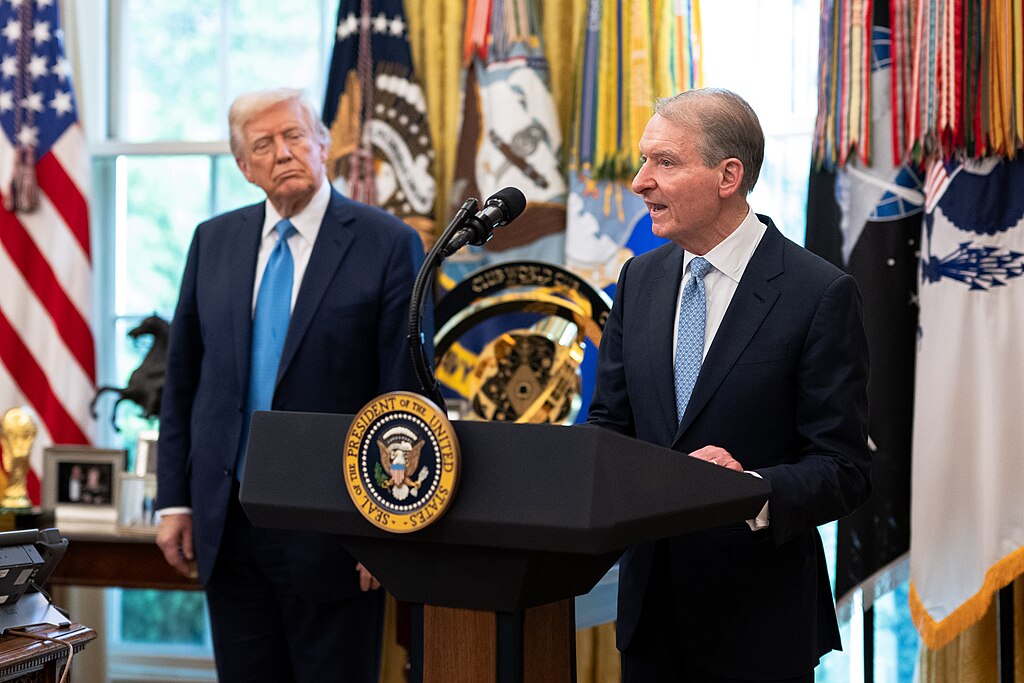
President Donald Trump’s effort to limit Democratic participation in federal regulatory agencies has created a rare and consequential scenario for the U.S. crypto industry: the two most influential financial regulators, the Securities and Exchange Commission (SEC) and the Commodity Futures Trading Commission (CFTC), are now fully controlled by Republican crypto advocates.
The shift became official after the SEC said goodbye to its only Democratic commissioner, Caroline Crenshaw. Known for her strong consumer protection stance, Crenshaw frequently warned against what she viewed as excessive enthusiasm for digital assets. She openly opposed bitcoin exchange-traded funds (ETFs), argued that crypto markets encouraged speculation and gambling, and cautioned that political interests could influence crypto adoption. With her departure, the SEC is now led exclusively by Trump-appointed Chairman Paul Atkins and commissioners Hester Peirce and Mark Uyeda, both widely regarded as pro-crypto policymakers.
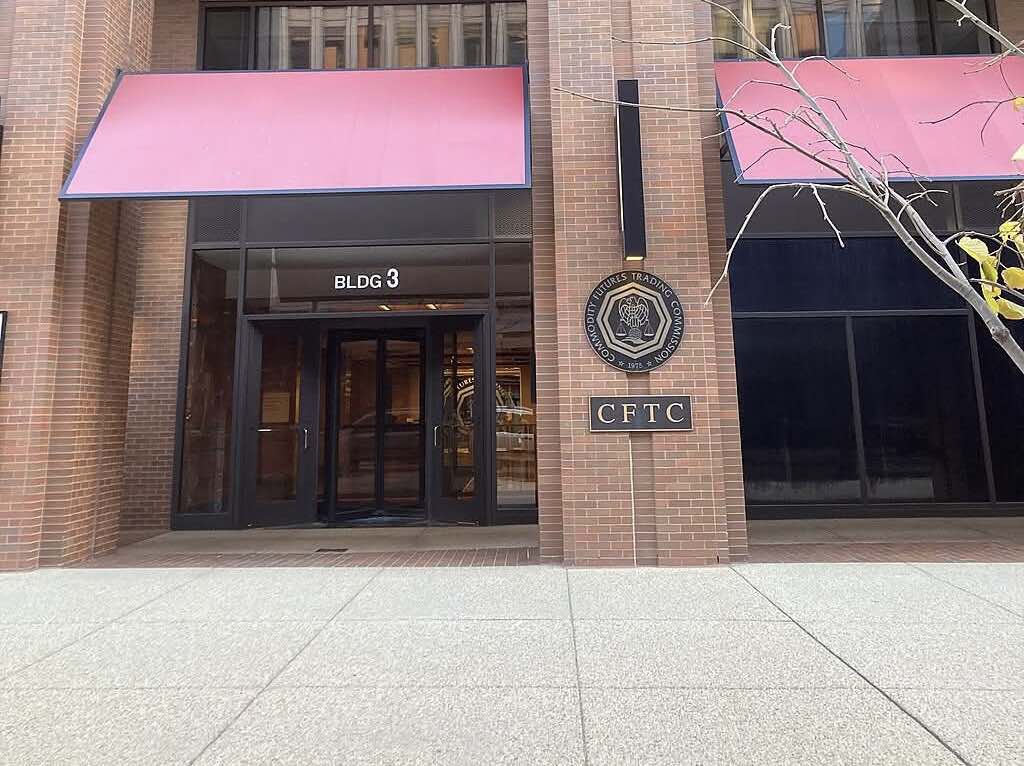
A similar situation has unfolded at the CFTC. Trump nominee Mike Selig was confirmed as chairman late last year and sworn in on Dec. 22. Shortly after, Acting Chairman Caroline Pham left the agency for an industry role at MoonPay, leaving Selig as the sole commissioner in a five-member panel. While this consolidation may accelerate crypto-friendly policy, it also removes internal debate and bipartisan oversight.
The absence of Democratic commissioners at both agencies has become a key obstacle in Congress, particularly in the U.S. Senate, where Democrats are pushing for their party’s vacancies to be filled as part of negotiations over a comprehensive crypto market structure bill. Historically, presidents from both parties have nominated commissioners from opposing parties to maintain balance, often through negotiated confirmation packages. Trump, however, has remained noncommittal, questioning whether Democrats would do the same if roles were reversed.
Despite the political uncertainty, both agencies are moving quickly on crypto regulation. Under Atkins, the SEC has deprioritized crypto enforcement actions and issued guidance on mining, staking, custody, memecoins, and other digital asset activities. At the CFTC, recent initiatives included approval of leveraged spot crypto trading and the creation of an advisory panel of industry CEOs.
For now, U.S. crypto regulation is advancing at full speed under Republican leadership, with or without congressional legislation. If Congress passes a new crypto regulatory framework, the task of writing and enforcing permanent rules would currently rest entirely with Republican commissioners, underscoring how political dynamics are shaping the future of digital asset regulation in the United States.


















Comment 0