

 News
News  Coin Information
  About us
  Customer Service


 Add as a preferred source on Google
Solana (SOL) is attempting to break out of a months-long trading range, with market participants closely watching whether it can clear the key $98 resistance level—a move that analysts say could reset near-term price targets and reinforce a broader narrative of growing 'institutional demand' for yield through staking.
SOL was trading around $89.05, slipping 3.59% over the past 24 hours but still up about 4.6% over the past 30 days. Since February, the token has largely oscillated between $78 and $98, forming what technical analysts describe as a clearly defined channel, with a midpoint pivot near $88.
Research cited by MEXC Research and Crypto.news frames $98 as the decisive ceiling on the daily chart. A confirmed breakout above that level could open the door to an initial move toward $107, with a secondary target around $117. Failure to reclaim $98, by contrast, would raise the odds of a drift back to the $88 pivot—and in a deeper risk-off move, a retest of the $78 lower boundary.
By market capitalization, Solana remains a top-tier asset, ranked No. 7 at roughly $51.4 billion. Its 24-hour trading volume was about $3.7 billion, with circulating supply estimated near 578.11 million SOL against a total supply of about 626.48 million.
While Solana-specific fundamentals have not shown a sudden deterioration, the broader crypto complex has been pressured by macro-driven de-risking. According to 24/7 Wall Street, major tokens sold off as expectations for near-term regulatory easing faded, with Bitcoin (BTC) slipping below $80,000 while Ethereum (ETH) and XRP (XRP) gave back gains—dragging SOL lower in tandem.
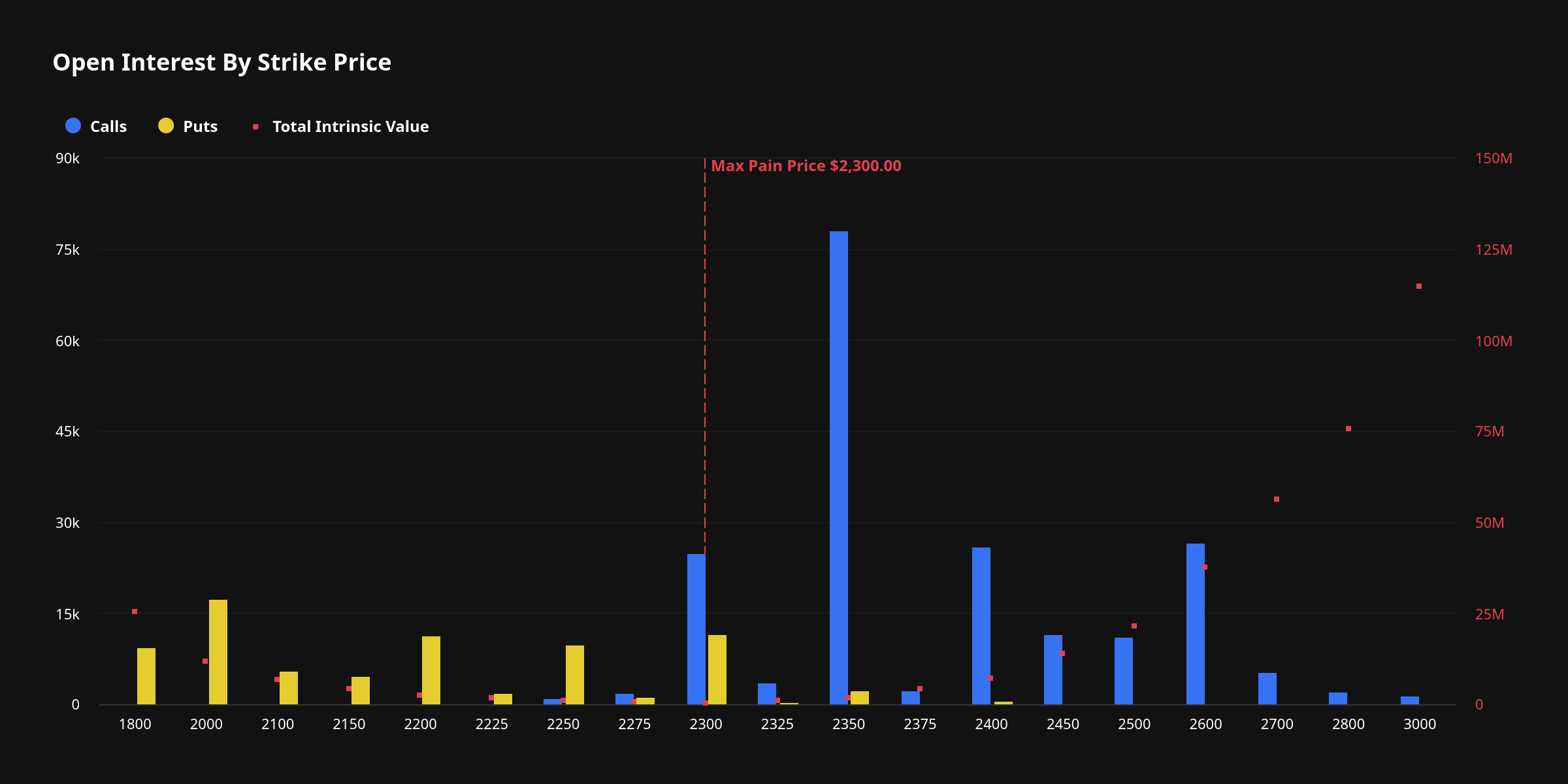
A key mechanical driver cited in the pullback was options positioning around expiries on Deribit. Roughly $2.6 billion in options tied to Bitcoin, Ethereum, Solana, and XRP reached maturity, amplifying short-term volatility. For Solana, about $17 million in options expired, with a 'max pain' level near $86—below the spot price area around $91 at the time, a setup that can sometimes coincide with price gravitating toward levels that inflict the most losses on option holders.
Rising U.S. Treasury yields and renewed concern that the Federal Reserve could keep rates higher for longer also weighed on risk appetite. As capital rotated toward yield-bearing instruments—such as tokenized Treasury products—selling pressure intensified across crypto, reinforcing the view that the latest move in SOL was largely an externally driven repricing rather than a Solana-only story.
Against that backdrop, institutional and corporate holders within the Solana ecosystem have increasingly emphasized 'staking yield' over short-term price movements. MEXC Research highlighted the financials of large SOL-holding companies, noting that Forward Industries reported a net loss of approximately $283 million for the quarter, largely attributed to unrealized losses as SOL fell from about $124 to $83. Yet the same report pointed to a striking improvement in revenue: quarterly revenue reached about $13 million, roughly four times year-over-year, with most of it linked to Solana staking returns.
Forward Industries was described as staking nearly all of its more than 7 million SOL holdings, with an annualized staking yield around 6.5% to 7.2%. The firm has also been cutting operating costs and continuing share repurchases, suggesting it has maintained a long-term holding posture without immediate liquidity stress. Upexi was also cited as recording roughly $109 million in unrealized losses, though the report characterized those losses as accounting-driven and not necessarily reflective of the company’s ongoing cash generation from on-chain staking.
The contrast underscores a recurring feature of crypto treasury strategies: mark-to-market accounting can create large swings in reported earnings even when operational cash flow is supported by recurring network yields. For proof-of-stake networks like Solana, staking-based income can function as a stabilizing component for long-term holders, while also supporting network security by incentivizing token lock-up.
The Solana name itself has also contributed to market confusion. Some outlets recently referenced earnings materials distributed via GlobeNewswire for “Solana Company” (Nasdaq: HSDT), a traditional публич company that reported roughly $3.6 million in revenue for its fiscal first quarter. Despite the branding, the company is not related to the Solana blockchain, SOL token, or Solana Labs. Market observers have urged investors to verify sources and context when headlines include the word “Solana,” particularly during periods of heightened volatility.
Looking ahead, some analysts have pointed to expectations around a forthcoming 'Alpenglow' upgrade, which is being discussed as a potential catalyst aimed at improving network speed and stability. While not a driver of the day’s price action, ongoing technical upgrades are part of the longer-term thesis for Solana’s role in high-throughput use cases spanning DeFi, NFTs, and gaming, where low fees and rapid transaction finality remain central selling points.
For now, SOL’s immediate narrative remains split between macro headwinds and a market structure defined by the $78–$98 range. A clean break above $98 would likely shift momentum and validate bullish technical targets, while another rejection could keep price action bound to the channel—leaving staking-focused institutional holders to continue prioritizing yield as the market searches for clearer direction.
🔎 Market Interpretation
- Range-bound structure: SOL has traded in a well-defined $78–$98 channel since February, with a key midpoint/pivot near $88. Price around $89 keeps the market near the pivot, signaling indecision rather than a confirmed trend.
- Key resistance = $98: Analysts frame $98 as the decisive daily-chart ceiling. A confirmed break could re-rate near-term expectations, while failure keeps SOL susceptible to mean reversion toward $88 and potentially $78.
- Macro pressure dominates: Broader crypto weakness (risk-off rotation, higher U.S. Treasury yields, “higher for longer” rate fears) is portrayed as the main driver, implying SOL’s dip is more externally driven repricing than a Solana-specific deterioration.
- Derivatives amplify volatility: Large options expiries (about $2.6B across majors) likely increased short-term swings. SOL saw about $17M expire, with max pain near $86, a level that can sometimes act like a magnet into expiry windows.
- Institutional narrative shifts to yield: The article highlights a growing focus on staking yield as a core “institutional demand” angle, which can cushion long-term holders even when spot prices fluctuate.
💡 Strategic Points
- Breakout roadmap:
- Bull trigger: A confirmed daily breakout above $98 could set initial technical targets near $107 and then $117.
- Bear/mean-reversion path: Rejection at $98 raises odds of drifting back to the $88 pivot; deeper risk-off conditions could push a retest of $78.
- Positioning awareness: Traders should monitor options-related levels (e.g., max pain ~$86) around expiry periods because they can add short-term noise that temporarily overrides fundamentals.
- Yield as a “carry” thesis: Corporate holders highlighted (e.g., Forward Industries) reportedly stake most of their SOL, earning roughly 6.5%–7.2% annualized. This can provide recurring returns that partially offset drawdowns, reinforcing a longer-horizon holding posture.
- Accounting vs cash flow: The article stresses that unrealized mark-to-market losses can heavily distort reported earnings even if staking income supports ongoing cash generation—important when evaluating crypto-treasury companies.
- Headline hygiene: “Solana Company” (Nasdaq: HSDT) is not related to the Solana blockchain/SOL token. Investors should verify the entity behind “Solana” headlines to avoid misattribution during volatile markets.
- Medium-term catalyst watch: The discussed “Alpenglow” upgrade is presented as a potential future catalyst (speed/stability), supportive of the long-term throughput/low-fee thesis across DeFi, NFTs, and gaming—though not the day’s price driver.
📘 Glossary
- Resistance (e.g., $98): A price zone where selling pressure has historically capped advances; a breakout above it can shift market positioning.
- Trading range / channel ($78–$98): A market regime where price oscillates between defined support and resistance levels rather than trending.
- Pivot (near $88): A commonly traded mid-range level that often acts as a short-term “balance point” for price.
- Confirmed breakout: A move above resistance that sustains (often measured on a daily close and follow-through), reducing the odds of a false move.
- Max pain (near $86): The options strike level where option buyers collectively suffer the greatest losses at expiration; sometimes associated with price gravitating toward that level into expiry.
- Options expiry: The date contracts mature; large expiries can increase volatility as hedges are adjusted and positions roll off.
- Risk-off / de-risking: Market behavior where investors reduce exposure to higher-volatility assets, often favoring safer or yield-bearing instruments.
- Staking yield: Returns earned by locking tokens to help secure a proof-of-stake network; can be viewed as an on-chain income stream.
- Mark-to-market (unrealized) loss: An accounting loss reflecting a decline in the current market price of held assets, not necessarily a realized cash outflow.
- Tokenized Treasuries: Blockchain-based representations of U.S. Treasury exposure that offer yield and can compete with risk assets when rates are high.






















Comment 0