

 News
News  Coin Information
  About us
  Customer Service


 Add as a preferred source on Google
Alea Research says a three-way mix of rising rates, an overcrowded AI trade, and the rapid spread of tokenized stock exposure is reshaping risk markets—pushing crypto to behave less like an idiosyncratic asset class and more like a pure function of global liquidity. The firm argues that investors are increasingly prioritizing 'liquid exposure' over traditional 'ownership', a shift that could accelerate if long-end yields stay elevated and financial innovation continues to route speculative demand into synthetic products.
In a recent report published this week, Alea Research outlined how macro conditions, AI infrastructure spending, and tokenized equities are interacting at the same time—creating a more unstable backdrop for cryptocurrencies, equities, and adjacent high-beta assets. The researchers point to higher U.S. long-term yields, a sharp repricing in Japanese government bonds, and concentrated equity leadership as key signals that the market’s underlying support is narrower than headline indices suggest.
Macro: higher yields and Japan’s pull on global capital
The report highlights a deterioration in the U.S. fiscal picture alongside stubborn inflation dynamics. Alea notes that the U.S. Treasury posted an April surplus of $215 billion, down $43 billion year-over-year, while spending climbed to $622 billion, pressured by higher interest costs and defense outlays. At the same time, Japan’s 30-year government bond yield surged to 4%, a record since the maturity was introduced—raising the odds that Japanese investors find domestic duration attractive again rather than recycling capital into U.S. Treasuries and other offshore long-dated bonds.
That matters because Japan’s institutional flows have long been a structural source of demand for foreign yield products. If the home market begins offering compelling returns with lower currency and hedging complexity, the marginal direction of 'global liquidity' can shift—an outcome that tends to tighten conditions for risk assets worldwide.
Alea also argues that inflation is proving more persistent than markets appear to be pricing. U.S. consumer price trends remain in the high-3% range, well above the Federal Reserve’s 2% objective, even as real income growth slows and household credit quality shows signs of strain. Against that backdrop, the report cautions that expectations for a quick Fed pivot toward rate cuts could be overly optimistic.
The report further flags a potential change in the Fed’s inflation “scoreboard.” With the first meeting under Chair Kevin Warsh expected in mid-June, Alea says policymakers could place greater weight on metrics such as 'trimmed mean PCE' rather than the traditional core PCE lens, which could make inflation appear cooler on paper while leaving lived price pressures and embedded expectations less resolved.
Crypto: Bitcoin still trading like a macro risk asset
In that rate environment, Alea contends that Bitcoin (BTC) continues to trade less like 'digital gold' and more like a duration-sensitive macro asset—highly responsive to changes in real rates, oil-linked inflation expectations, and dollar liquidity. The firm describes BTC as stuck below a key resistance level after failing to hold a move above the $80,000 area, with spot Bitcoin ETF flows shifting from six straight weeks of net inflows to a period of redemptions.
With the U.S. 10-year yield holding above roughly 4.6% and energy-driven inflation risks still in play, Alea believes incremental buyers are likely to remain tactical rather than long-term allocators. The implication is that BTC’s narrative tailwinds may not be enough to offset macro headwinds if yields do not ease—and that crypto beta could reassert itself during bouts of risk-off positioning.
AI: the market is paying for concentration, not breadth
Alea’s second pillar focuses on the AI-led equity rally, arguing the headline strength masks a fragile internal structure. According to the report, 71% of the S&P 500’s gains have been driven by just 10 stocks—an unusually concentrated pattern that can amplify volatility if leadership falters or earnings expectations reset.
While Goldman Sachs has projected cumulative AI infrastructure spending could reach $7.6 trillion between 2026 and 2031, Alea says the market’s focus is shifting from the size of the spend to the 'monetizable workflow' question: whether capital intensity turns into durable profit pools. “Model performance alone may no longer justify a premium,” the report suggests, framing the next stage as a contest for distribution, data advantages, and enterprise inference demand rather than benchmark wins.
Corporate behavior is already reflecting tighter scrutiny of AI costs. Alea points to reports that Microsoft ($MSFT) has moved away from internal Claude Code licensing in favor of GitHub Copilot CLI, and to Uber ($UBER) disclosing that parts of its engineering organization burned through an annual AI budget in a matter of months. Those examples, the report argues, underscore that AI has moved from cheap experimentation to a capex-like phase where cost control and payback periods matter—and where equity investors may increasingly penalize vague narratives without clear unit economics.
Tokenized stocks: demand for 24/7 exposure over shareholder rights
The report’s third pillar centers on tokenized equities, which Alea describes as the most attention-grabbing theme inside crypto markets right now. Speculation that the U.S. Securities and Exchange Commission could explore a more flexible framework for stock-linked tokens has fueled interest in products that offer price exposure without traditional shareholder features such as issuer consent, voting rights, or dividend entitlement.
That structure creates a clear trade-off: less legal and governance alignment with the underlying company, in exchange for continuous trading, easier access, and the ability to express views with fewer operational constraints. Alea frames this as evidence that investors are migrating from 'legal ownership' toward 'synthetic exposure'—a shift that could expand the total addressable market for equity-like trading instruments while simultaneously raising questions about investor protections and market integrity.
The same appetite is showing up in pre-IPO markets. Alea points to collaborations such as Polymarket’s partnership with Nasdaq Private Market as a signal that demand is rising for tradable views on private-company valuations and timing—especially for high-profile names including OpenAI, Anthropic, Stripe, SpaceX, and Perplexity. The report argues many retail participants are less focused on information rights or liquidation preferences and more interested in liquid tools that track perceived price swings.
However, Alea warns that as prediction markets and tokenized instruments move closer to corporate events, 'information asymmetry' and insider-risk concerns could become more acute—particularly when market participants trade on signals that are hard to audit or verify in real time.
Altcoins and DeFi: fundamentals matter more as liquidity tightens
Within major altcoins, Alea highlights a widening debate over Ethereum’s (ETH) leadership and execution capacity amid reports of departures among core development talent. Solana (SOL), by contrast, is described as showing improving chain metrics despite a softer first-quarter price performance, with continued expansion in transactions and RWA-related activity.
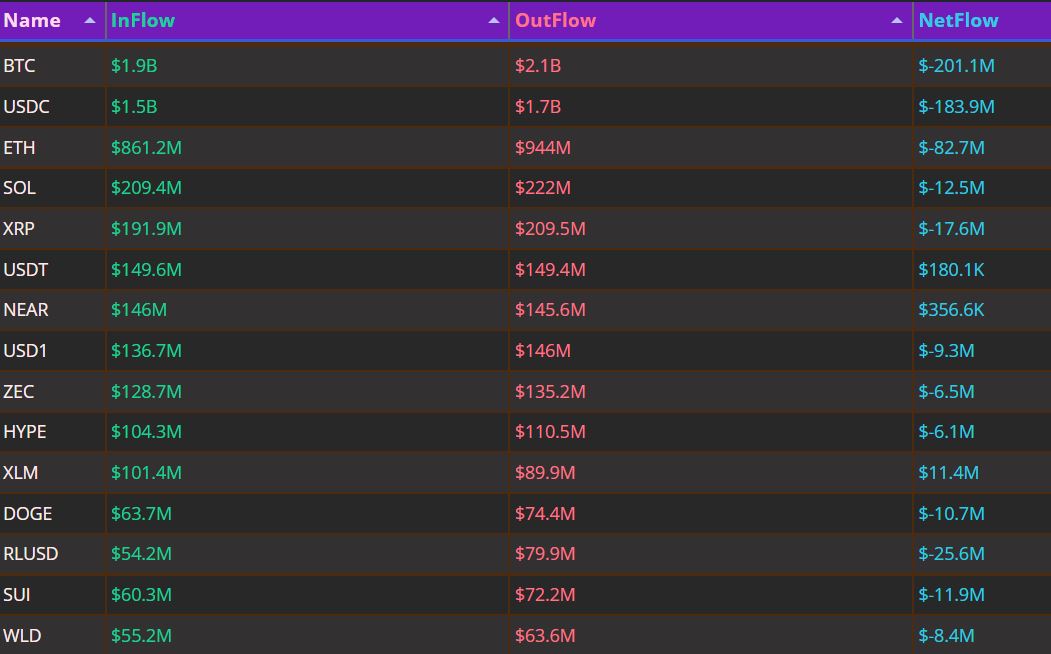
The report also flags strong inflows into Hyperliquid (HYPE), supported by the rollout of ETF-like products, while cautioning that the next phase may hinge on positioning risk and crowding if price momentum continues. Other narratives gaining traction, according to Alea, include Zcash (ZEC) on privacy and 'quantum resistance' themes, and NEAR (NEAR) on privacy-routing expansion.
In decentralized finance, the firm notes more differentiation in capital flows and revenue models across projects such as Ethena, Morpho, Jupiter, Sky, and Euler. The report says strategies tied to stablecoin yield, institution-oriented lending, and protocol-revenue buyback mechanics are being re-rated, while “theme-only tokens” may be abandoned quickly if volatility rises and liquidity conditions worsen. Over time, Alea expects markets to reward structures that generate real cash flows—or explicitly connect revenue and liquidity to token value.
Mining stocks are being re-priced as power and data-center plays
Alea also observes that listed crypto-adjacent equities are undergoing a narrative transformation. Companies such as Core Scientific ($CORZ), Iris Energy ($IREN), Riot Platforms ($RIOT), and CleanSpark ($CLSK) are increasingly being valued not just as Bitcoin (BTC) miners, but as power, data-center, and AI colocation businesses. The report suggests that firms with signed AI capacity contracts are being rewarded, while those leaning on AI rhetoric without concrete commercial proof points face a discount.
That, Alea argues, is the same broader shift playing out across both crypto and equities: investors are moving from 'story' to 'cashability'—from narratives to verifiable demand, clear counterparties, and credible exit paths.
What it means for markets
Alea concludes that the current regime can be distilled into three dominant forces: rates, tokenized equities, and Bitcoin (BTC). If long-end yields fail to settle, valuation multiples across risk assets could remain under pressure. Tokenized stocks and pre-IPO trading tools may attract fresh liquidity and broaden participation, but they also expose structural gaps around rights and disclosures. And Bitcoin, despite its unique positioning, is likely to remain highly sensitive to macro liquidity rather than trading purely on internal crypto catalysts.
In Alea’s view, the most resilient positioning in this environment will gravitate toward assets with observable cash flows, transparent demand, and defined market structure—while investors may need to be more skeptical of crowded, headline-driven tokens that rely on sentiment alone.
🔎 Market Interpretation
- Crypto is converging with global liquidity: Alea Research argues Bitcoin and broader crypto are behaving less like an idiosyncratic asset class and more like a liquidity-sensitive “macro risk” trade, driven by real rates, USD liquidity, and inflation expectations.
- Rates are the primary gravity: Elevated long-end yields (U.S. 10Y ~4.6%+) keep valuation multiples pressured across high-beta assets; hopes for a rapid Fed easing cycle may be mispriced if inflation persistence remains near the high-3% range.
- Japan is a potential liquidity siphon: A sharp rise in Japan’s 30-year JGB yield (~4%) could redirect Japanese institutional capital back home, reducing structural demand for offshore duration and tightening global financial conditions.
- Equity strength is narrow: The AI-led rally shows heavy concentration (Alea cites 71% of S&P 500 gains from 10 stocks), raising fragility if leadership stumbles or monetization expectations reset.
- Tokenized stocks shift the market from “ownership” to “exposure”: 24/7 tradable synthetic equity products are channeling speculative demand into instruments that provide price tracking but weaken traditional shareholder rights—potentially increasing participation while introducing integrity and protection risks.
- Regime summary (Alea’s lens): Rates + tokenized equity rails + Bitcoin’s macro beta define the current cross-asset setup; narrative strength matters less than funding conditions and verifiable cash-flow potential.
💡 Strategic Points
- Positioning should be “cashability-first”: Prefer assets/protocols/companies with observable revenues, transparent demand, and credible counterparties over purely sentiment-driven themes, especially if liquidity tightens further.
- Expect BTC to remain duration-sensitive: With real rates and energy-linked inflation risks elevated, Alea expects marginal BTC buyers to be tactical; ETF flow reversals (from weeks of inflows to redemptions) reinforce the risk-asset framing.
- Watch policy measurement risk: A potential shift toward metrics like trimmed mean PCE could make inflation appear cooler statistically without fully alleviating lived-price pressures—impacting rate expectations and volatility across risk markets.
- AI trade: scrutinize unit economics, not headlines: The market is shifting from “spend size” to “monetizable workflow.” Corporate anecdotes (budget overruns, tool switching) suggest a move from experimentation to cost-controlled deployment—risking multiple compression for vague AI narratives.
- Tokenized equities: liquidity benefit vs. rights gap: Synthetic stock tokens may broaden access and increase turnover, but investors trade off voting/dividends/issuer alignment; expect regulatory and market-structure headlines to become a volatility catalyst.
- Altcoins/DeFi differentiation increases: As liquidity tightens, flows may favor protocols with sustainable yield sources, lending demand, and explicit value capture (e.g., revenue-linked mechanics) while “theme-only” tokens can see rapid abandonment.
- Crypto-adjacent equities repricing: Miners are increasingly valued as power/data-center/AI colocation plays; signed capacity contracts and verifiable demand earn premiums, while “AI rhetoric” without contracts gets discounted.
📘 Glossary
- Global liquidity: Broad availability and cost of funding (rates, balance sheets, cross-border flows) that often governs risk-asset performance.
- Long-end yields: Interest rates on long-maturity government bonds (e.g., 10Y–30Y). Higher long-end yields typically tighten financial conditions and pressure growth valuations.
- Duration-sensitive asset: An asset whose price is highly responsive to interest-rate changes (often growth equities and “long-duration” risk assets; Alea places BTC in this bucket under current conditions).
- Concentrated leadership: A market rally driven by a small number of large stocks, increasing fragility if those leaders correct.
- Tokenized stocks / synthetic exposure: Blockchain-based instruments designed to track equity prices, typically without full shareholder rights (voting, dividends, issuer consent).
- Information asymmetry: A situation where some participants have better or earlier information than others—especially problematic around corporate events and thinly-auditable markets.
- Trimmed mean PCE: An inflation measure that removes extreme price moves to estimate underlying trend inflation; can differ from core PCE and influence policy narrative.
- Risk-off: Market regime where investors reduce exposure to volatile assets, often favoring cash, short-term bills, and defensive positioning.
- RWA (Real-World Assets): Traditional assets (e.g., credit, treasuries, invoices) represented or integrated on-chain to enable new settlement, collateral, or trading uses.
- Cashability: Practical ability to convert narrative into measurable cash flows—real customers, contracts, fees, and sustainable margins.





















Comment 0