

 News
News  Coin Information
  About us
  Customer Service


 Add as a preferred source on Google

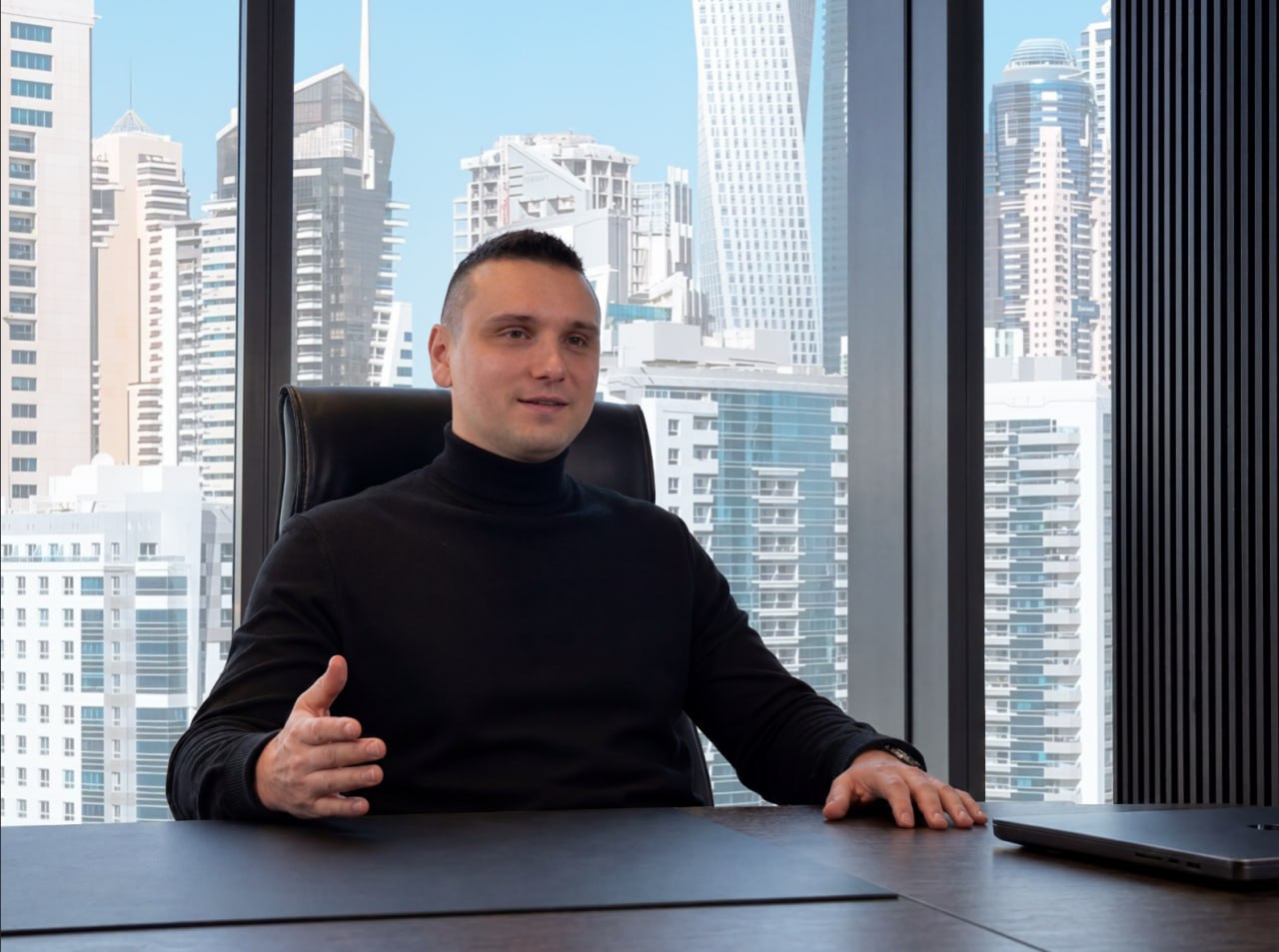
Korea's crypto market has a reputation for being early. Upbit, the country's dominant exchange, regularly posts daily trading volumes that rival Nasdaq. XRP trades more intensely here than almost anywhere else on earth. And WeFi — a financial infrastructure startup that most of the world had never heard of — accumulated thousands of Korean users before it had any formal presence in the country.
That detail is not lost on Maksym Sakharov, WeFi's co-founder and Group CEO.
"Korean users found us," he said in an interview with TokenPost. "That tells you something about where real demand for this model exists."
On April 28, WeFi announced a partnership with Visa. The collaboration — focused on stablecoin-based payment use cases across selected markets in Europe, Asia and Latin America — instantly repositioned WeFi from a project familiar mainly to crypto insiders into something that traditional financial institutions had to pay attention to. Reeve Collins, WeFi's chairman, co-founded Tether and served as its CEO until 2015. Sakharov, born in Zaporizhzhia, Ukraine, built his path through Whitemark, a blockchain real estate platform backed by 500 Startups, and Exflow, a licensed European OTC crypto exchange.
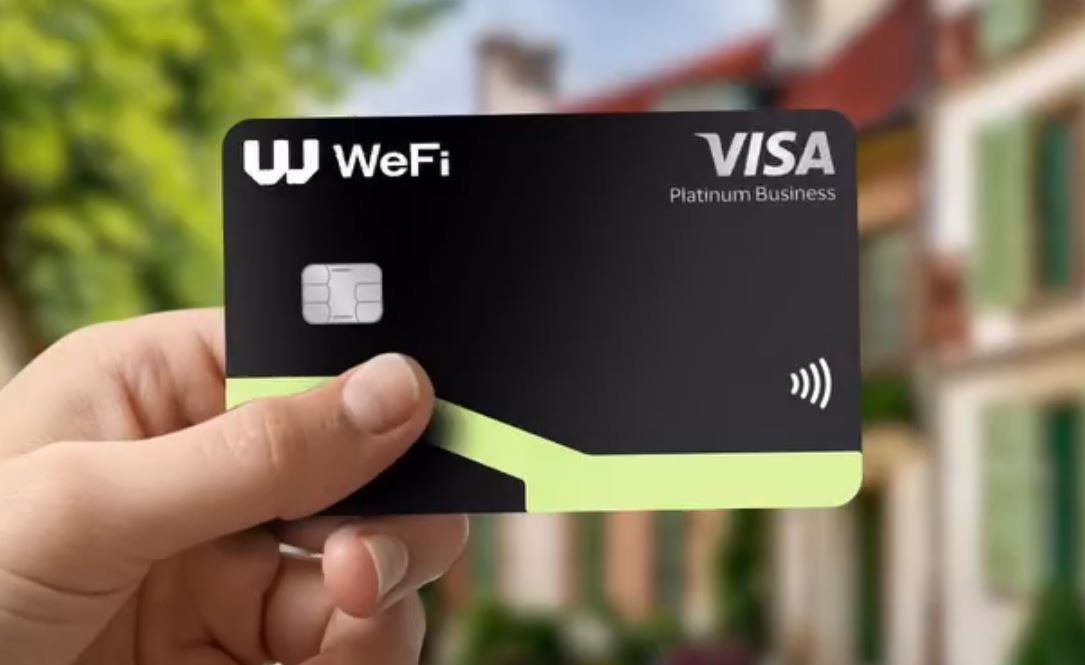
The combination of a Tether co-founder, a Visa partnership, and a growing user base in one of the world's most active crypto markets has made WeFi one of the more closely watched names in on-chain finance heading into the second half of 2026.
The Pitch
Sakharov's one-sentence description of what the Visa deal means for an ordinary person is deliberately plain.
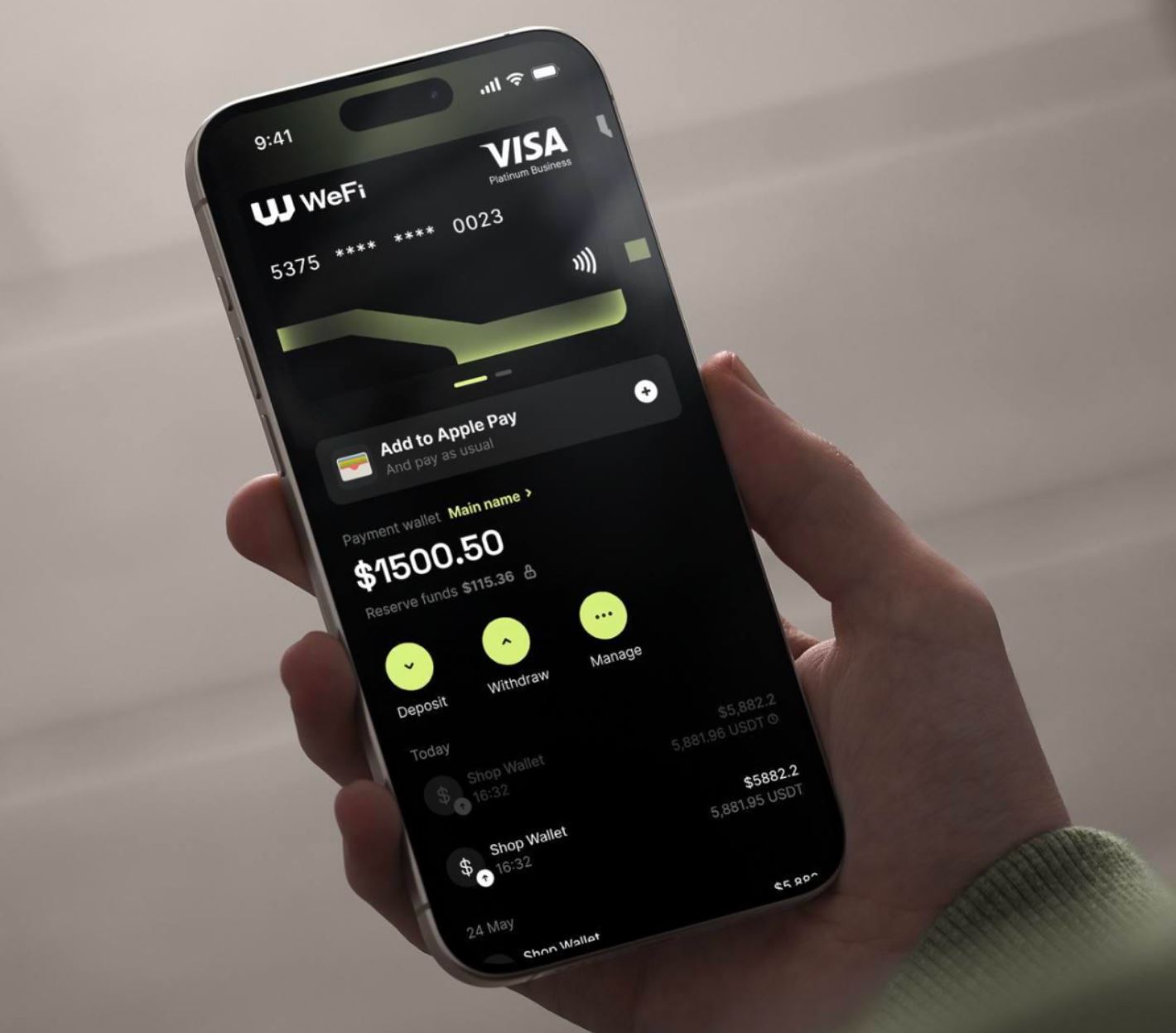
"Your crypto balance now spends like a bank account everywhere Visa is accepted — without converting, without waiting, and without losing value along the way."
That framing matters because it cuts against how most crypto card products actually work. The standard architecture involves selling crypto at the point of transaction, routing value through banking rails, and delivering fiat to the merchant. The friction is real: slippage, conversion fees, and a mental separation between a user's crypto holdings and their spending money.
WeFi's claim is that this separation disappears. Users hold a single unified balance. When they tap a card at a convenience store — a CU or GS25, say, in the Korean context — the merchant sees a standard Visa transaction. The on-chain mechanics that made it possible are invisible.
"From the outside, it looks identical to any other bank card payment," Sakharov said. "From the inside, it removes the mental and operational separation between crypto and fiat entirely."
Visa has other stablecoin partners. Bridge, acquired by Stripe, Rain and BVNK are all working on similar card infrastructure. Sakharov does not dismiss them.
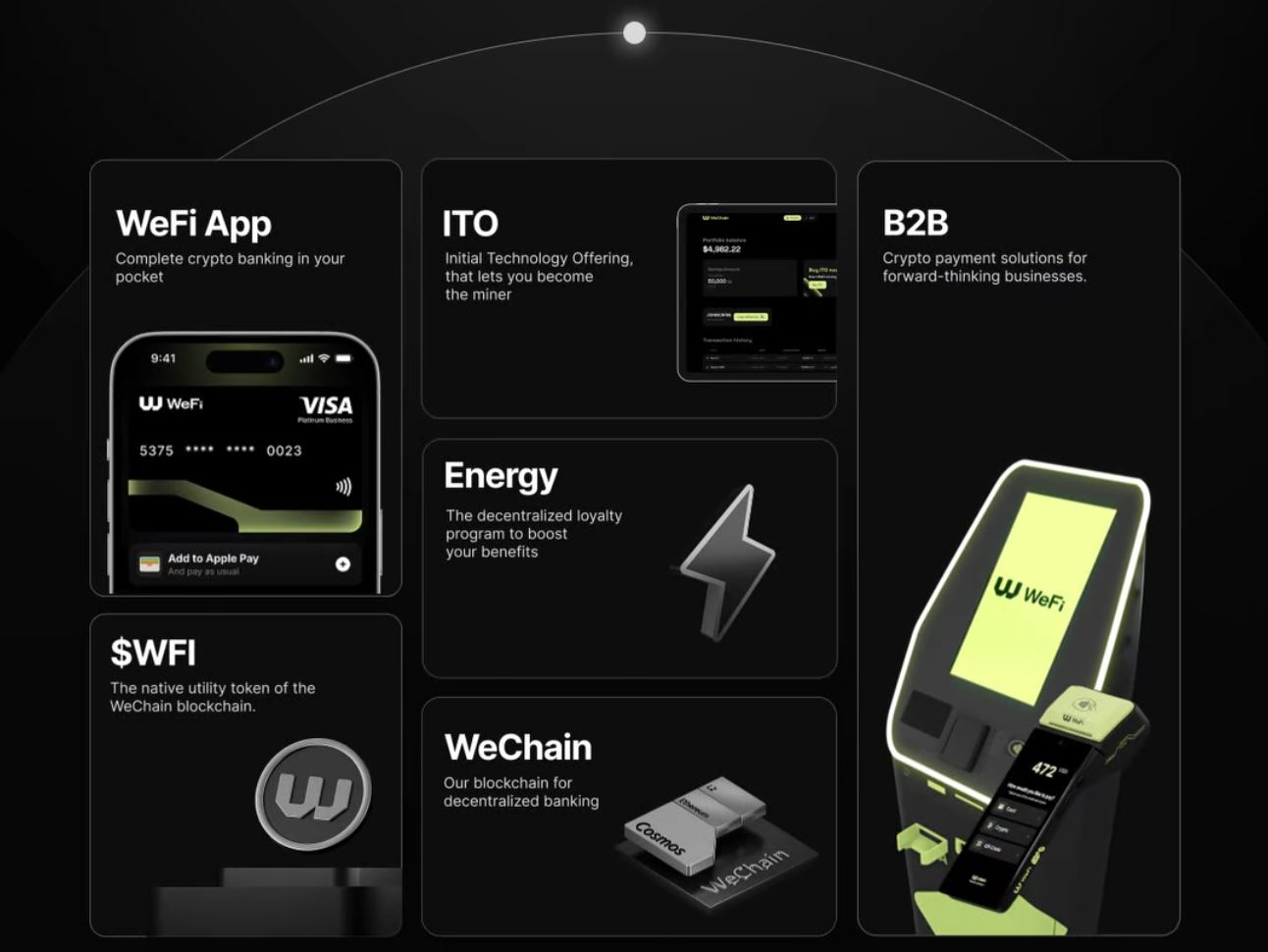
"Those companies are building strong stablecoin payment and card products," he said. "But WeFi is solving a different problem. We are not building a card program. We are building an on-chain banking layer that unifies fiat and crypto into a single balance and a fully integrated user experience."
The distinction he is drawing is between a payment product and a banking infrastructure. Visa, in his framing, is a component of the latter — not the product itself.
The Deobank Argument
The word deobank — short for decentralized on-chain bank — is one Sakharov coined. It now appears in CoinMarketCap's Web3 glossary. The concept is straightforward enough to explain but sharp enough in its critique of the existing system to invite scrutiny.
Neobanks, in Sakharov's telling, solved the interface problem and stopped there. Kakao Bank and Toss Bank — Korea's best-known digital lenders — are the obvious local examples: clean apps, fast onboarding, but the same correspondent banking chains, the same settlement cycles, the same fee structures underneath.
"The deeper issue is control," he said. "Once funds enter the banking system, users no longer have direct ownership in practice, only access granted by intermediaries."
Deobanking, as he defines it, does not improve that interface layer. It replaces the rails.
The critique is not new — it is essentially the original promise of decentralized finance. What distinguishes WeFi's position, at least in theory, is the attempt to make that replacement invisible to end users. The goal is an experience that feels like banking while running on entirely different infrastructure.
The Token Question
WeFi's tokenomics invite hard questions, and Sakharov has invited them himself. His public position — "never make money from selling your company's own token, ever" — is stated with the confidence of someone who has watched enough token projects collapse to know the failure mode.
WFI, WeFi's native utility token, carries a market capitalization in the hundreds of millions of dollars. The Energy mining structure, through which users earn WFI by holding tokens and participating in the network, draws inevitable comparisons to the models Sakharov says he opposes.
He pushes back directly.
"WeFi does not profit from selling its own token. All WFI tokens belong to the community and are distributed through a fair distribution process — designed to avoid concentration by whales and manipulators. Energy is simply a rewards points program."
His analogy is Bitcoin. The original cryptocurrency was never sold by a company. Participants contributed resources to support the network and received rewards in return. Sakharov argues WFI follows the same principle.
The first WFI halving — reducing mining rewards from eight to four WFI per second — is expected in the autumn or winter of 2026, though the exact timing is block-based rather than calendar-fixed. Whether it produces the kind of price movement Bitcoin halvings have historically preceded depends, he said, on one variable.
"Demand at the time of the halving. If the Visa collaboration drives real adoption and network usage by then, the halving takes place in a completely different context. Positioning should be based on adoption and network activity, not the event alone."
On Regulation
WeFi holds payment service provider licenses in Canada, Seychelles, Hong Kong and several other jurisdictions. Sakharov describes compliance not as a legal burden but as infrastructure — the thing that gets you in the room with serious financial partners when unregulated alternatives cannot enter.
"In every serious integration discussion, compliance is often the deciding factor," he said. "It determines whether a product can even be deployed in a given market."
The EU's implementation of MiCA surprised him, he said — positively. Regulatory clarity, once established, produced institutional movement faster than most expected.
"Within months, we saw serious financial institutions move from observation to concrete infrastructure commitments. Regulation functioned as an accelerant. That dynamic is worth watching as other jurisdictions continue to develop their own approaches."
The GENIUS Act in the United States, which introduced one-to-one reserve requirements and on-chain reporting for stablecoins, he calls a necessary but incomplete starting point.
"What is missing is interoperability. The framework addresses issuance without addressing how stablecoins from different issuers settle against each other at scale. The industry needs settlement standards, not just issuance standards."
On CBDCs — a question with particular resonance in Korea, where the Bank of Korea's Project Han River deposit token pilot has enrolled major retail chains including CU and GS25 — his answer is unambiguous.
"More relevant. WeFi's infrastructure is designed to be agnostic to the form of the underlying money. Whether the balance is a stablecoin, a tokenized deposit, or a CBDC, the on-chain banking account still provides the unified balance layer and payment connectivity. CBDCs succeeding at scale means more digital money moving through infrastructure that needs to connect to real-world payment rails. That is exactly the problem WeFi is built to solve."
The Record, and What It Reveals
On May 30, 2025, at a conference in Dubai, WeFi set a Guinness World Record. The category: most viewers of a blockchain live stream on YouTube. The number: 121,348 concurrent viewers.
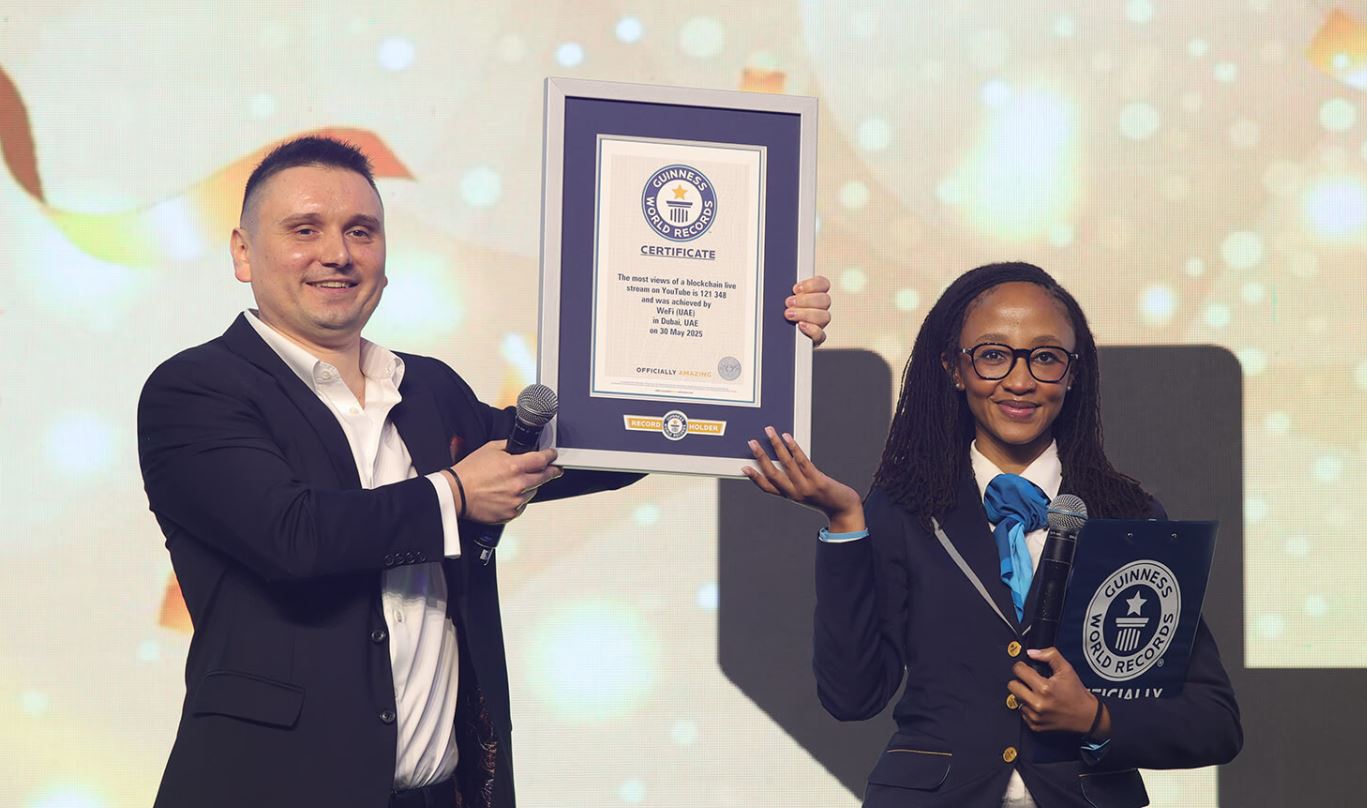
For a financial infrastructure company, the figure is unusual. For a company that describes itself as building for the next billion users rather than existing crypto natives, it is something else — evidence, however imperfect, that WeFi has built something its users care about enough to evangelize.
"Community," Sakharov said, when asked what drove the number. "Not marketing spend, not influencer strategy, but a community that had genuine skin in the ecosystem and brought others in organically. The conditions that produced that number are harder to manufacture than to replicate mechanically."
The honest qualifier is implicit: the record was set on a livestream that included a Ferrari raffle. Organic community and promotional mechanics are not mutually exclusive. But 121,348 people watching a blockchain event live is a data point that does not appear by accident.
The Founder
Sakharov was born in Zaporizhzhia — a city in southeastern Ukraine that has become, in the past three years, a byword for the cost of geopolitical instability. He does not lean heavily on that biography in interviews. When pressed, his answer is measured.
"Growing up in Ukraine gives you an early and instinctive understanding of why financial sovereignty matters. Economic conditions have not always been predictable. Access to opportunity has not always been equal. When that is your starting point, the idea that financial infrastructure should work for everyone stops being a philosophical position. It becomes something more concrete."
He has described himself publicly as an entrepreneur rather than a businessman — "a businessman opens a new shop; my path is more entrepreneurial." The distinction is starting to blur. WeFi now operates in more than 80 countries with more than 150,000 users. The questions he finds himself asking, he said, are shifting.
"Not what we should build next, but whether what we have built is working as well as it should for the people already using it. That is a businessman's question. I am learning to ask it more."
Korea, and What Comes Next
Korea remains one of the more complicated markets on WeFi's map. The country's Virtual Asset User Protection Act is in effect. The Digital Asset Basic Act is under deliberation. KoFIU, the financial intelligence unit that oversees virtual asset service providers, has tightened enforcement against unregistered foreign operators marketing to Korean users.
WeFi already has those Korean users — thousands of cardholders who found the product before the product found them officially. Formalizing that presence requires navigating a regulatory framework that has forced out or delayed most foreign crypto companies that have tried.
Sakharov made a prediction at the start of 2026: "2026 equals personal finance becoming personal again." Four months in, he said the direction is confirmed — though the sequence surprised him.
"I expected consumer demand to lead and institutions to follow slowly. What actually happened is that institutions moved faster than anticipated, driven by regulatory clarity and competitive pressure. Now consumer adoption is following the infrastructure being put in place. The sequence is slightly different from what I predicted. The destination is the same."
For Korea specifically, that destination involves a regulated consumer brand, a VASP partnership, and eventually a presence in the 55,000-store convenience network that the Bank of Korea is already turning into digital payment infrastructure. Whether WeFi gets there before the regulatory window narrows is the question that the next twelve months will answer.





Comment 0