

 News
News  Coin Information
  About us
  Customer Service


 Add as a preferred source on Google


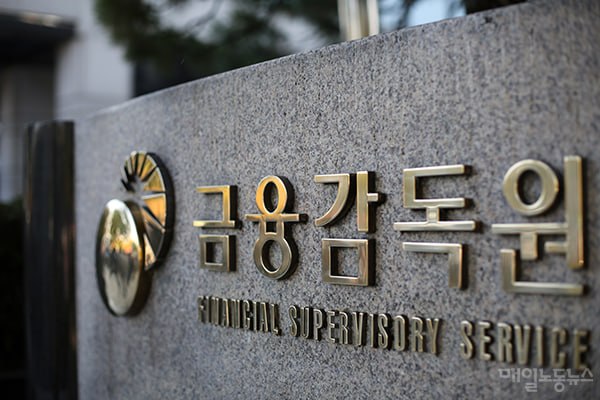
SEOUL, May 4 (TokenPost) — South Korea's Financial Supervisory Service has escalated its campaign against illegal trading in the country's cryptocurrency markets, unveiling an AI-powered surveillance infrastructure that monitors domestic and overseas exchanges in real time and can automatically identify clusters of coordinated accounts suspected of price manipulation.
The FSS, in a press release dated April 30, described the crypto market as "structurally vulnerable" to unfair trading — a combination of round-the-clock hours, extreme price volatility, and cross-border asset flows that have historically made investigations slow and resource-intensive. A surge in algorithmic trading has compounded the challenge, the regulator said, making manual detection increasingly inadequate.
The disclosure marks the second phase of a broader technology overhaul at the agency's Virtual Asset Investigation Bureau. The first phase, completed in January, introduced an AI function to automatically extract suspicious trading intervals. The latest upgrade adds two more capabilities: a real-time market surveillance system and an algorithm that maps networks of potentially colluding accounts.
Eight Exchanges, Nearly 2,000 Tokens
The monitoring platform — internally designated ORBIT, for Oversight & Reporting system of Blockchain Irregular Transactions — collects price, order book, trade execution, and market alert data at one-minute intervals from five domestic won-denominated exchanges: Upbit, Bithumb, Gopax, Coinone, and Korbit. The system also ingests feeds from Binance, Coinbase, and OKX, covering a combined 1,942 listed tokens as of late March.
A real-time dashboard surfaces anomalies in price, volume, and market warnings, allowing investigators to flag suspicious assets immediately rather than waiting for exchange referrals. The FSS said it plans to expand automated detection algorithms — drawing on pattern libraries built from prior enforcement cases, including so-called "racehorse" pump schemes and "penned" price manipulation tactics — to full deployment in the first half of 2026.
The shift toward proactive detection is already producing results. The FSS said it launched six self-initiated investigations in the first four months of 2026, compared with seven in all of 2025 and zero in 2024.
AI Maps the Network
The second upgrade targets the investigation phase. A machine-learning module within the agency's trading analysis platform VISTA — Virtual Assets Intelligence System for Trading Analysis — now automatically identifies groups of accounts likely operating in coordination.
Previously, investigators manually reviewed funding sources and order-channel linkages to determine whether accounts were acting together. The new system analyzes trading patterns, order timing, and order-placement methods across accounts that traded the same token, grouping behaviorally similar accounts and flagging those connected to a known suspect as a probable "suspect cluster."
The algorithm combines two techniques: UMAP, which compresses high-dimensional trading data — potentially hundreds of variables — into a compact three-to-five-variable representation while preserving its underlying structure, and HDBSCAN, which automatically determines the optimal number of clusters and assigns similar data points to the same group.
In performance tests against three actual price-manipulation cases, the model identified all known suspect accounts in each instance. In two of the three cases, the model flagged additional accounts beyond those confirmed in the original investigation, suggesting it may surface nominee accounts or undisclosed affiliates that human reviewers missed. The FSS acknowledged the current algorithm has limitations in precisely classifying small groups and said performance would improve as more enforcement cases accumulate.
What Comes Next
The FSS outlined a third phase of upgrades targeting on-chain and financial-flow tracing. Planned additions include large language model-based text analysis to flag suspicious assets earlier, automated generation of investigative documents, and a function to identify wallets and accounts requiring further tracking based on on-chain fund movements.
The regulator framed the initiative as part of its broader Financial Consumer Protection Improvement Roadmap, saying it would continue to strengthen enforcement capacity to protect users and maintain orderly market conditions.


















Comment 0