

 News
News  Coin Information
  About us
  Customer Service


 Add as a preferred source on Google

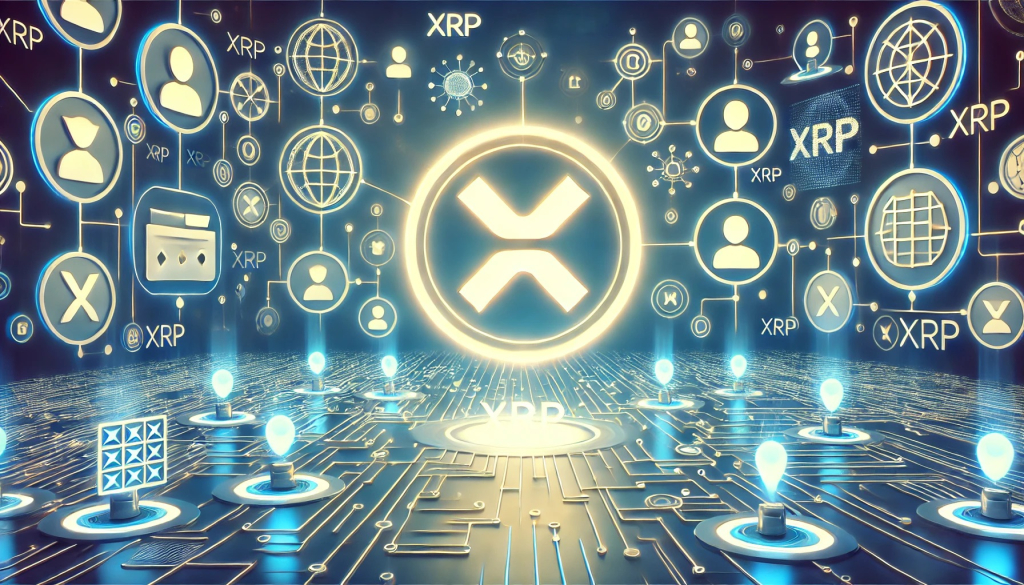
Ripple’s XRP Ledger (XRPL) is moving closer to the center of global payments infrastructure as major Wall Street and card-network players expand experiments and deployments that use the blockchain for cross-border settlement and tokenized asset transfers—an evolution that markets are increasingly reading as more than a routine “crypto integration” story.
According to the report, Morgan Stanley has launched a direct crypto trading service positioned with a lower-fee structure compared with competitors such as E*TRADE. The launch is notable not only for the brokerage-style offering, but because the service reportedly integrates XRPL as a cross-border payments rail. The initiative is described as a joint build-out involving Ripple, JPMorgan Chase ($JPM), Mastercard ($MA), and Ondo Finance, with the goal of creating a blockchain-based interbank settlement layer.
Industry commentators framed the development as a sign of accelerating 'institutional adoption' of XRPL rather than a standalone product release. Thinking Crypto, a crypto-focused media channel referenced in the report, characterized the partnership as a meaningful milestone for institutional participation in XRP-linked infrastructure.
The report also said multiple industry sources have confirmed that JPMorgan and Mastercard are using XRPL to execute cross-border transfers of tokenized U.S. Treasuries—an application that sits at the intersection of traditional capital markets plumbing and blockchain settlement. Proponents argue the model could address long-standing frictions in legacy cross-border payment systems, including cost, settlement time, and reconciliation complexity often associated with SWIFT-linked workflows.
Altcoin Daily separately highlighted the same theme, suggesting XRPL is gaining traction as an infrastructure layer even in institution-facing trading and settlement contexts. Ondo Finance’s involvement was presented as strategically important given its role in the expanding real-world asset (RWA) tokenization ecosystem, where tokenized Treasury products have become a leading use case for on-chain finance.
Market pricing reflected mixed near-term sentiment alongside a firmer medium-term trend. As of May 7, 2026, XRP was trading around $1.41, with a reported market capitalization of roughly $87.1 billion, keeping it near the top of the global crypto rankings. The report put circulating supply near 61.8 billion tokens and 24-hour trading volume around $2.53 billion. XRP was down about 2.9% over the prior 24 hours, while still posting gains of about 2.9% over the past week and roughly 7.8% over the past 30 days.
Technical indicators cited in the report leaned constructive. On the daily chart, XRP’s MACD was described as having flipped bullish, while the RSI remained in a neutral range—often interpreted as room for additional upside without immediate 'overbought' conditions. Markets in the Morning, a channel referenced in the piece, suggested XRP has been moving steadily within its range and could test the $1.80 area in the short term if momentum holds.
Still, the narrative is not risk-free. Cheeky Crypto warned that delays around key regulatory votes could trigger a deeper pullback, with $0.53 highlighted as a potential downside level that some analysts view as a historical accumulation zone for large holders. The implication is that while infrastructure headlines can support sentiment, policy timing remains a key variable for positioning and volatility.
On the policy front, the report pointed to incremental progress in U.S. digital asset regulation. It cited a joint SEC–CFTC agreement in March 2026 on definitions for digital assets, which some market participants see as a step toward clearer legal treatment for major tokens including XRP. Attention is now shifting to the U.S. Senate’s 'Clarity Act', described as a potential catalyst for broader institutional participation if it reduces ambiguity around compliance frameworks for trading, custody, and settlement.
Broader market conditions were portrayed as relatively steady, with Bitcoin (BTC) trading near $82,400 over the same period, providing a stabilizing backdrop for risk assets in crypto. Against that setting, the reported involvement of large financial institutions in XRPL-enabled settlement and tokenized Treasury transfers is being taken by some observers as evidence that XRP’s ecosystem is evolving from speculative positioning toward more durable roles in payments and capital markets infrastructure.
🔎 Market Interpretation
- From “crypto product” to infrastructure signal: The market is reading reported XRPL usage by Morgan Stanley, JPMorgan, and Mastercard as a shift toward production-like financial plumbing, not merely another exchange/trading launch.
- Tokenized Treasuries as the wedge use-case: Cross-border transfers of tokenized U.S. Treasuries are framed as a high-credibility institutional application because they combine regulated collateral with clear settlement value (faster transfer, fewer intermediaries, improved reconciliation).
- Mixed near-term price action, firmer medium-term bias: XRP is down on the day but up over weekly/monthly windows; the article suggests this aligns with “headline-driven” volatility while broader adoption narratives support trend resilience.
- Technical posture seen as constructive: A bullish MACD flip with neutral RSI is interpreted as potential upside capacity without immediate overbought pressure; a $1.80 area is flagged as a near-term test if momentum persists.
- Policy remains the swing factor: Infrastructure headlines may buoy sentiment, but regulatory vote timing (e.g., Senate processes) is highlighted as a major volatility trigger with downside scenarios still in play.
💡 Strategic Points
- Watch “who settles what” (and on which rail): If major institutions are truly settling cross-border flows and moving tokenized Treasuries via XRPL, confirmation details that matter include transaction volumes, counterparties, jurisdictions, and whether flows are pilot-scale or recurring.
- RWA partnerships can compound adoption: Ondo Finance’s role implies a strategy of linking tokenized government securities (RWA products) to payment/settlement rails—potentially increasing institutional stickiness if integrated into treasury management and collateral workflows.
- Two-sided risk framing for positioning:
- Upside drivers: additional institutional confirmations, scaling of tokenized Treasury transfer programs, and clearer U.S. compliance rules (SEC–CFTC alignment, “Clarity Act” progress).
- Downside drivers: regulatory delays or adverse votes; a sentiment unwind could revisit historically discussed accumulation zones (article cites $0.53 as a referenced level), especially if broader crypto risk appetite weakens.
- Key levels and signals mentioned: $1.80 as an upside test area; monitor MACD follow-through and RSI shifts from neutral to overheated as potential cues for momentum continuation vs. exhaustion.
- Macro backdrop filter: BTC stability (~$82.4K in the article) is treated as supportive for altcoin infrastructure narratives; sharp BTC drawdowns could dominate XRPL-specific positives.
📘 Glossary
- XRPL (XRP Ledger): A blockchain network associated with Ripple, used for payments, settlement, and asset transfers.
- Cross-border settlement: The process of finalizing payments between parties in different countries, often involving multiple intermediaries and messaging/clearing layers.
- Tokenized U.S. Treasuries: Blockchain-based representations of U.S. government debt instruments (or claims on them) that can be transferred on-chain.
- RWA (Real-World Assets): Traditional financial or physical assets (e.g., Treasuries) represented and transacted via blockchain tokens.
- SWIFT-linked workflows: Legacy cross-border payment processes that rely on SWIFT messaging and correspondent banking, often associated with higher cost and slower settlement.
- Interbank settlement layer: Infrastructure that enables banks to settle obligations with each other, ideally with finality and standardized reconciliation.
- MACD: A technical indicator (Moving Average Convergence Divergence) used to gauge momentum and trend changes.
- RSI: Relative Strength Index; a momentum oscillator indicating potential overbought/oversold conditions.
- Accumulation zone: A price range where large holders are thought to buy over time, potentially providing support.
- Clarity Act: Referenced proposed U.S. Senate legislation aimed at reducing regulatory ambiguity for digital assets (definitions, compliance, custody, trading, settlement).














Comment 0