

 News
News  Coin Information
  About us
  Customer Service


 Add as a preferred source on Google
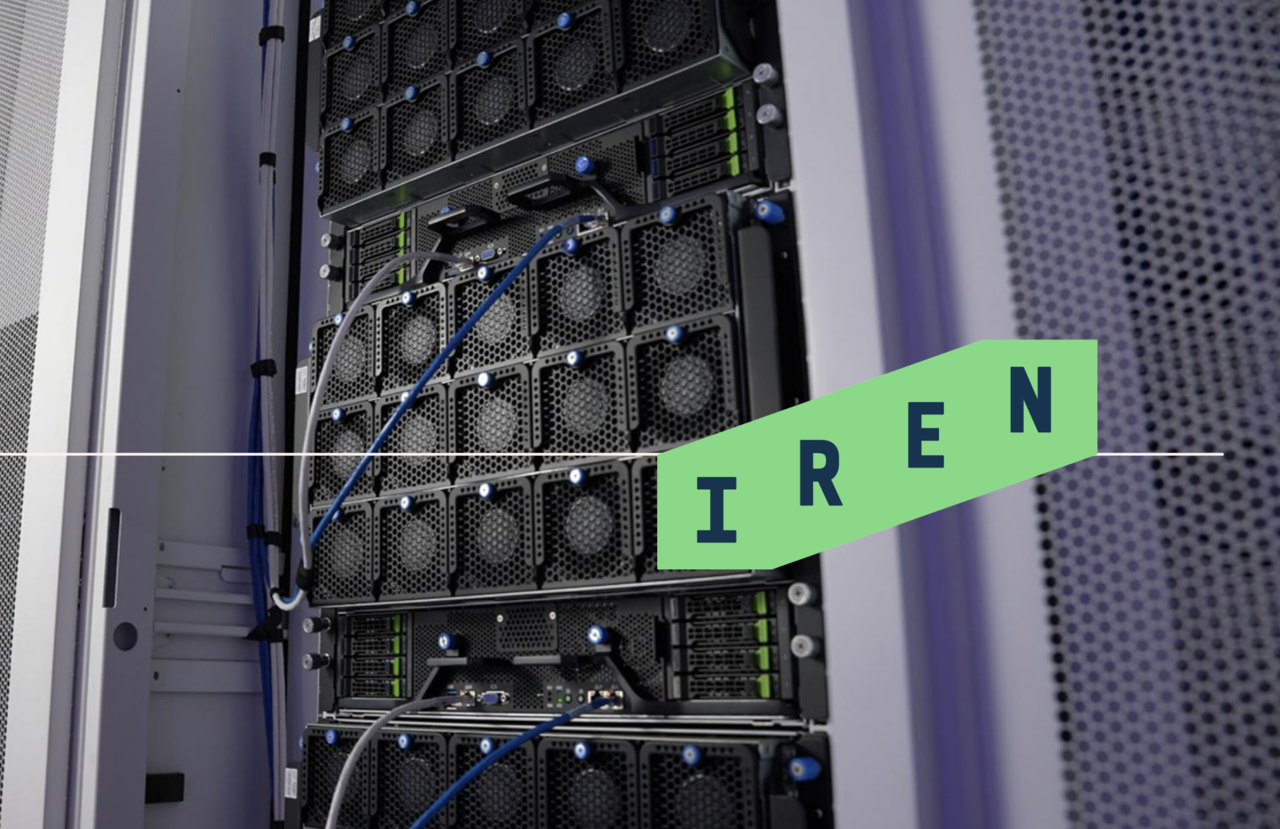
Australia-based IREN is accelerating a major pivot from Bitcoin (BTC) mining to the AI cloud business, as weakening mining economics squeeze margins and force listed miners to search for more durable revenue streams.
IREN, formerly Iris Energy, has been battling a widening gap between production costs and market prices in its mining operations. According to figures cited in the report, the company is effectively losing roughly $19,000 per Bitcoin, with all-in production costs estimated near $80,000 per coin—above prevailing market levels over the period referenced. The dynamic highlights the post-halving reality facing miners: higher efficiency requirements, greater sensitivity to power pricing, and heightened exposure to Bitcoin price drawdowns.
While AI currently represents only about 9% of IREN’s revenue mix, the company is planning a significant scale-up in infrastructure designed for GPU-intensive workloads. The report points to an expansion plan of up to 200 megawatts (MW) of liquid-cooled GPU capacity—an increasingly common approach in modern data centers as high-performance chips drive thermal density upward. Market observers expect the revenue profile to shift rapidly if the buildout stays on schedule, projecting that AI could account for as much as 70% of IREN’s revenue by 2026.
To underpin that shift, IREN is making a sizable bet on Nvidia’s next-generation hardware, with plans to purchase more than 50,000 Nvidia B300 GPUs and ultimately increase its total GPU holdings to about 150,000 units. The company is reportedly targeting more than $3.7 billion in AI cloud revenue by the end of 2026, a figure that would materially reposition the business away from a commodity-like mining model toward contracted compute services—where revenue visibility and margins can be higher, but customer concentration and delivery risk also rise.
The transition is capital intensive. The report says IREN has raised approximately $9.3 billion in funding to support the AI push, including around $3.5 billion in capital expenditures and roughly $3.7 billion through convertible bond issuance. Such financing structures reflect the broader AI data-center arms race, where companies are competing for scarce power capacity, advanced cooling solutions, and priority chip allocations, often requiring large upfront investment before revenue ramps.
Beyond the initial buildout, IREN is aiming for about $3.4 billion in annual revenue by 2026, supported by expansion across its “Horizon 1–4” roadmap and additional growth in British Columbia. Analysts cited in the report cautioned that elevated valuation expectations and execution risk remain key challenges, particularly given the complexity of delivering liquid-cooled, utility-scale GPU clusters on tight timelines. Still, they argued that the pivot could ultimately represent a successful long-term business model transformation—provided IREN can translate infrastructure spending into stable demand and durable contracts in an increasingly competitive AI cloud market.
🔎 Market Interpretation
- Mining margin compression is driving strategy shifts: IREN’s estimated all-in Bitcoin production cost (~$80,000/BTC) exceeding market levels implies roughly -$19,000 per BTC losses, illustrating how post-halving conditions are pressuring listed miners to find less cyclical revenue sources.
- Post-halving economics increase operational sensitivity: Higher network efficiency demands and greater dependence on low-cost power amplify downside exposure when BTC prices weaken, making mining revenues more volatile and harder to plan around.
- Capital is rotating toward AI compute infrastructure: The planned buildout (up to 200MW liquid-cooled GPU capacity) reflects an industry-wide race for power, cooling, and premium chip allocations as AI workloads raise data-center thermal density.
- Business-model re-rating hinges on execution: Moving from “commodity-like” mining to contracted AI cloud services can improve revenue visibility and margins, but increases delivery risk, customer concentration risk, and exposure to fast-changing AI demand cycles.
💡 Strategic Points
- Revenue mix inflection target: AI is ~9% of current revenue, but observers project it could reach ~70% by 2026 if the GPU buildout is delivered on schedule.
- Scale plan and hardware bet: IREN plans to buy 50,000+ Nvidia B300 GPUs and grow total GPU holdings to ~150,000, positioning for GPU-intensive workloads and higher-density deployments enabled by liquid cooling.
- Implicit “build → contract → monetize” pathway: Targeting $3.7B AI cloud revenue by end-2026 and ~$3.4B annual revenue by 2026 suggests the company is prioritizing rapid capacity deployment to win contracts—where utilization and pricing will determine whether returns justify upfront costs.
- Financing profile raises both speed and risk: Reported ~$9.3B funding (including ~$3.5B capex and ~$3.7B via convertible bonds) can accelerate buildout, but also heightens sensitivity to interest rates, equity dilution, and milestones needed to sustain valuation expectations.
- Operational focus areas to watch:
- Power access and pricing: competitive advantage depends on securing reliable, cost-effective electricity at scale.
- Cooling and deployment timelines: liquid-cooled, utility-scale GPU clusters are complex; delays can push revenue recognition and impair ROI.
- Customer/contract quality: longer-term contracted demand improves visibility, but concentration increases counterparty and churn risk.
- Geographic expansion execution: additional growth in British Columbia expands opportunity while adding permitting, grid, and construction coordination challenges.
📘 Glossary
- Bitcoin halving: A scheduled event that cuts the BTC block subsidy roughly in half, typically reducing miner revenue per unit of hashpower and pushing the industry toward higher efficiency and lower power costs.
- All-in production cost (per BTC): Estimated total cost to produce one Bitcoin, often including electricity, hosting/operations, depreciation, and overhead; when above BTC price, mining becomes unprofitable.
- GPU-intensive workloads: Compute tasks (e.g., AI model training/inference) that are best accelerated by graphics processing units due to parallel processing needs.
- Liquid-cooled GPU capacity: Data-center cooling approach using liquids to remove heat more efficiently than air cooling, important for high thermal-density racks.
- Megawatt (MW) capacity: A measure of power availability; in data centers, higher MW typically supports more servers/GPUs and greater computational throughput.
- AI cloud services: On-demand or contracted access to AI compute (GPUs, networking, storage) sold to customers; can offer steadier revenue than commodity mining if utilization is high.
- Convertible bonds: Debt that can convert into equity under set terms; often used to fund growth while potentially lowering cash interest costs, but can dilute shareholders if converted.
- Customer concentration risk: Dependence on a small number of customers for a large share of revenue, increasing vulnerability if a major customer reduces spending or leaves.
- Execution risk: The risk that a company fails to deliver projects on time/on budget (e.g., data-center construction, GPU procurement, commissioning), delaying revenue and pressuring returns.























Comment 0