

 News
News  Coin Information
  About us
  Customer Service




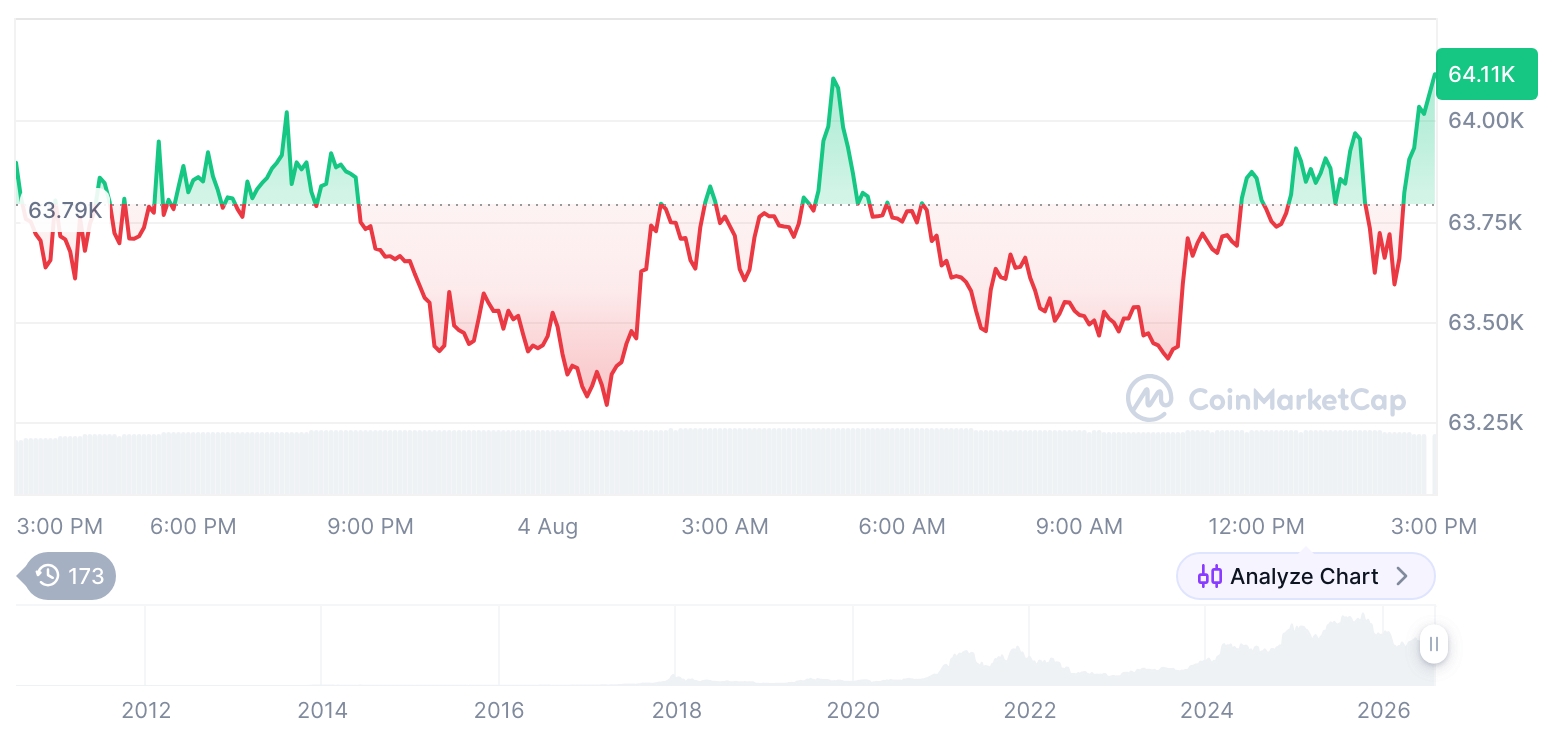
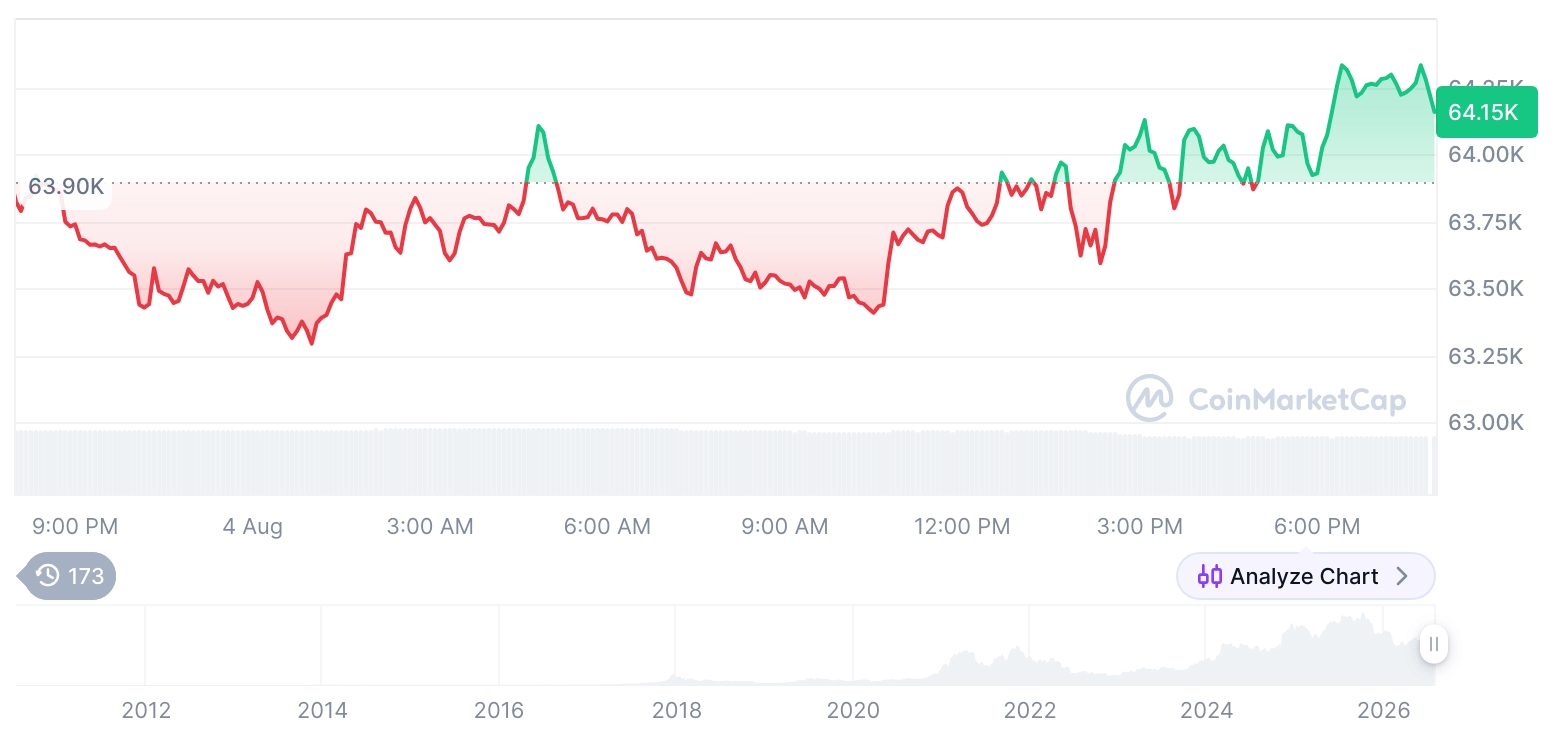
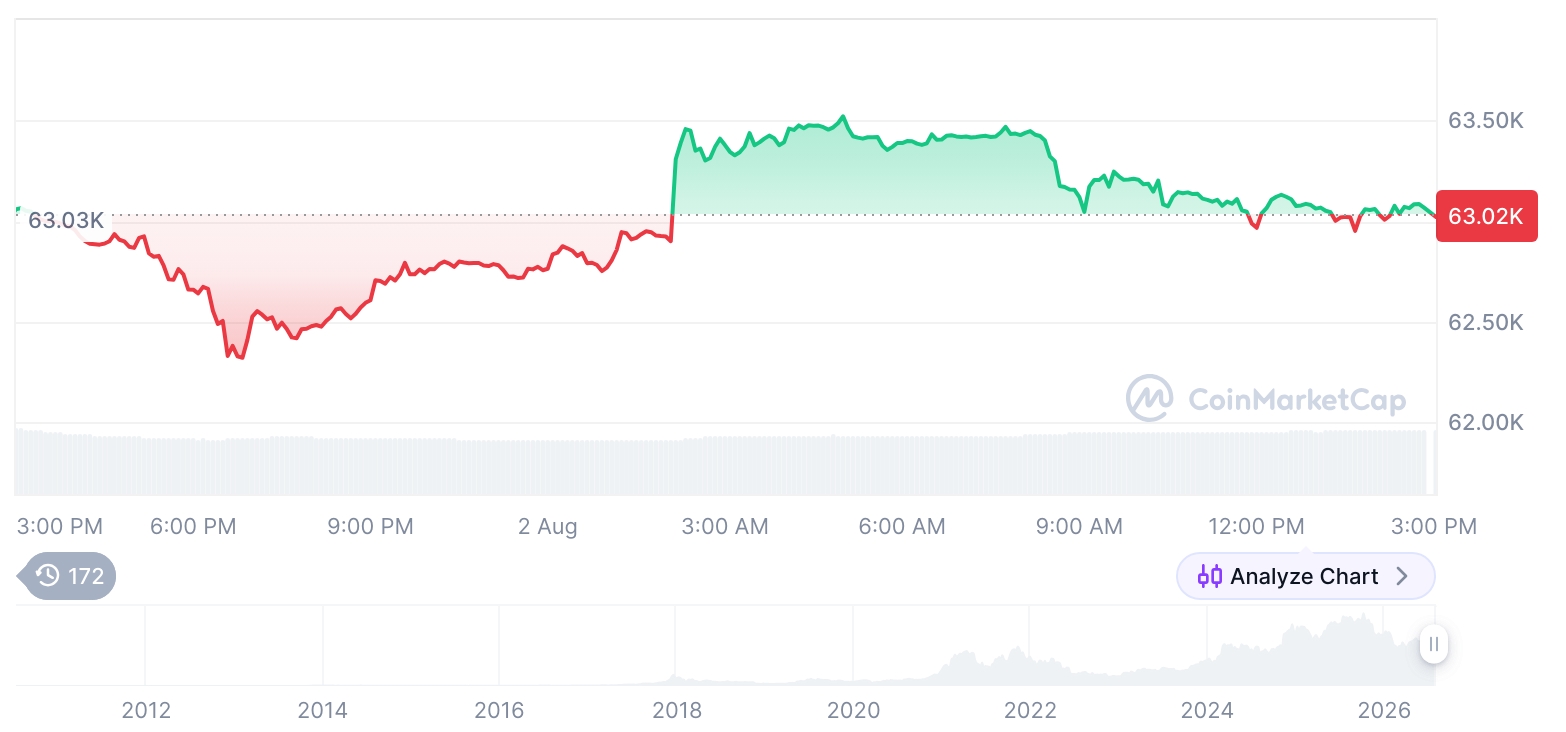
Bitcoin is showing signs of stability after recovering from its June decline, but the leading cryptocurrency remains locked in a tight trading range as investors wait for a decisive catalyst. Trading around $63,800, Bitcoin continues to consolidate between its 26-day and 50-day exponential moving averages (EMAs), highlighting a market that is balanced between buyers and sellers.
Despite rebounding from recent lows, Bitcoin has struggled to regain bullish momentum. The 50-day EMA near $67,000remains a key resistance level, repeatedly capping recovery attempts. Meanwhile, the 100-day and 200-day EMAsremain significantly higher, reinforcing the broader bearish market structure and indicating that a full trend reversal has yet to materialize.
On the downside, the $60,000 level continues to serve as an important support zone. While Bitcoin has successfully defended this psychological threshold, it has not generated enough buying pressure to break above major resistance levels. This has left the cryptocurrency trading within a relatively narrow range, reflecting investor caution.
Technical indicators also suggest a lack of clear market direction. The Relative Strength Index (RSI) is hovering near 50, signaling neutral momentum with neither bulls nor bears holding a decisive advantage. At the same time, trading volume has steadily declined during the recent consolidation phase, indicating reduced participation from both buyers and sellers.
Historically, periods of low volatility and shrinking trading volume often precede stronger price movements. For Bitcoin, the next major test is a convincing breakout above the 50-day EMA, which could open the door for a move toward the 100-day EMA near $72,000 and improve the overall technical outlook.
Until such a breakout occurs, Bitcoin is expected to remain range-bound as traders watch for macroeconomic developments, institutional activity, or other market catalysts capable of driving the next significant trend. For now, the world's largest cryptocurrency remains in a wait-and-see phase, with both support and resistance levels defining its near-term direction.










Comment 0