

 News
News  Coin Information
  About us
  Customer Service


 Add as a preferred source on Google

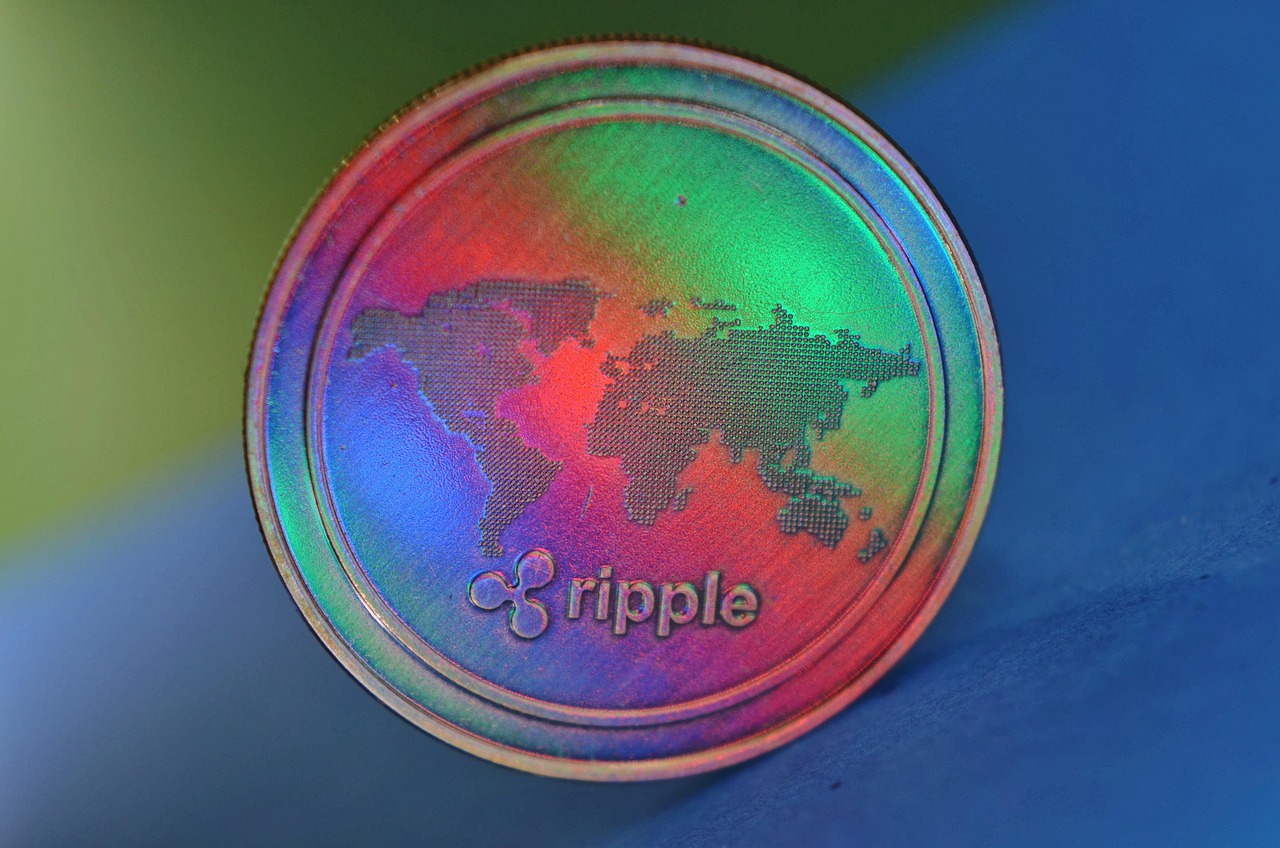
Ripple’s XRP is struggling to translate a string of bullish headlines into price momentum, holding near the $1.09 level even after achieving a key European regulatory registration and landing in an institutional multi-token ETF. The muted reaction underscores a market dynamic in which macro conditions—rather than token-specific catalysts—are still doing most of the heavy lifting.
As of July 19 at 09:00 UTC, XRP was trading at $1.0964, up 0.85% over 24 hours, according to CoinMarketCap data. Trading volume totaled roughly $621 million, while XRP’s market capitalization stood at about $68.49 billion, giving it a 3.10% share of the total crypto market. Fully diluted valuation was estimated near $109.6 billion.
Price performance remains mixed across timeframes. XRP was modestly higher on the hour (+0.20%) and the day (+0.85%), and flat-to-slightly positive on the week (+0.12%). However, the medium-term trend points lower, with returns of -2.83% over 30 days, -19.35% over 60 days, and -22.14% over 90 days—figures that suggest recent gains are more consistent with a fragile rebound than a sustained trend reversal.
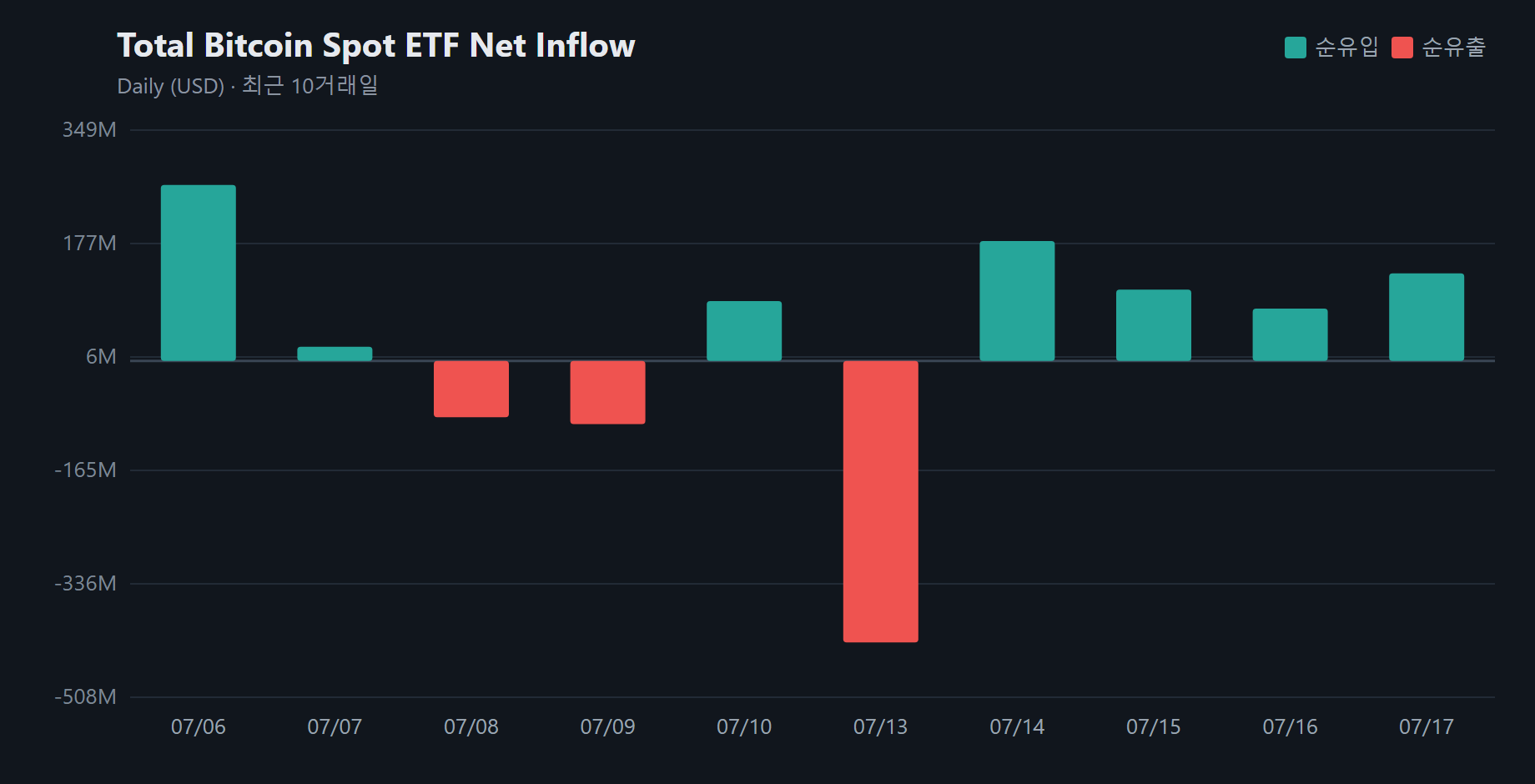
Market observers say the day’s uptick owes more to improving macro sentiment than to XRP-specific developments. CoinStats linked the move to cooling U.S. inflation expectations after softer CPI signals, a firmer outlook for the Federal Reserve to hold rates, and continued ‘liquidity inflow’ into spot crypto ETF products. In that context, XRP narrowly underperformed the broader market’s average daily increase of around 0.83%.
Positioning data also points to a more crowded short-term trade. Santiment reported that the long-to-short ratio for XRP and Ethereum (ETH) has climbed to a five-week high, signaling rapidly building bullish exposure. Analysts caution that while that can support near-term price strength, it can also amplify downside risk if the market turns and leveraged longs unwind.
The most substantive regulatory milestone this week came from Europe. Ripple has completed registration under the EU’s MiCA (Markets in Crypto-Assets) framework with the European Securities and Markets Authority (ESMA), securing ‘passporting rights’ across 29 jurisdictions. In practical terms, the designation allows Ripple to provide crypto-asset services across participating European markets without needing separate approvals in each country, potentially lowering the friction for institutional deployments tied to XRP-ledger infrastructure.
Industry participants broadly view the MiCA step as more than a checkbox exercise—an important legal foundation for scaling payment and settlement services in the region. Ripple’s ecosystem narrative has also been supported by reported growth in activity on the XRP Ledger (XRPL), including over 1.3 million AI-driven payment transactions processed on-chain, cited as evidence of expanding utility.
In the U.S., XRP also benefited from a high-profile institutional reference point after it was included in a multi-token ETF launched by T. Rowe Price. The development is seen as a potential medium-term catalyst because it broadens ‘institutional demand’ channels. Yet the market response was notably restrained, with some traders interpreting the lack of follow-through as a ‘sell-the-news’ dynamic. Many participants appear to be waiting for clearer evidence that ETF inclusion is translating into sustained net buying rather than symbolic exposure.
Beyond regulation and market structure, XRPL’s push into tokenized real-world assets (RWA) is gaining visibility. On-chain gold token XAUa has surpassed $1 million in cumulative trading volume on XRPL, a milestone proponents say showcases around-the-clock settlement and the potential to bypass the limited trading hours of traditional gold markets. For institutions exploring tokenized collateral and settlement rails, the ability to transact 24/7 remains a frequently cited advantage.
Analysts note that RWA tokenization is projected to scale dramatically by the end of the decade, potentially reaching multi-trillion-dollar levels. If that growth materializes, XRPL’s early positioning could reinforce longer-term demand drivers—though the immediate impact on XRP’s price action has so far been limited.
Regulatory uncertainty in the U.S. remains another overhang. Market participants are watching debate around the proposed ‘CLARITY Act’, which aims to define the legal status of major crypto assets—including whether certain tokens should be treated as securities or commodities. A clearer classification could improve market access and product development in the U.S., but the legislative path and outcomes remain uncertain, contributing to a wait-and-see posture.
Ripple’s ongoing legal conflict with the U.S. Securities and Exchange Commission continues to shape sentiment. Ripple’s CTO recently argued that prior court decisions have weakened the SEC’s core theory. Even so, traders are treating the case as a live variable: future rulings could still affect how XRP is distributed and traded in the U.S. market.
On the technical side, XRPL is scheduled to activate the ‘FixCleanup3_2_0’ amendment on July 29. The update is framed as a maintenance-oriented upgrade aimed at stability and operational efficiency rather than a feature release likely to drive short-term price moves. Still, protocol enhancements are often viewed as a marker of network maturity—important for long-horizon adoption narratives, even if not immediately reflected on charts.
From a price-structure perspective, technicians are focusing on support around the 61.8% Fibonacci retracement near $1.08. A decisive break below that area could expose the next key support zone around $1.06, while resistance is clustered near $1.10 to $1.12. In broader medium-term framing, analysts point to considerably higher reference levels—around $2.25 as a structural support marker and $2.85 as major resistance—highlighting how far XRP remains from reclaiming prior ranges.
For now, XRP’s inability to break out despite regulatory progress, ETF inclusion, and RWA growth is being characterized as a gap between ‘positive headlines’ and actual price traction. Observers say it may take time for improved rules and expanded institutional channels to convert into measurable spot demand—leaving XRP range-bound as traders weigh macro tailwinds against lingering legal and positioning risks.


















Comment 0