

 News
News  Coin Information
  About us
  Customer Service


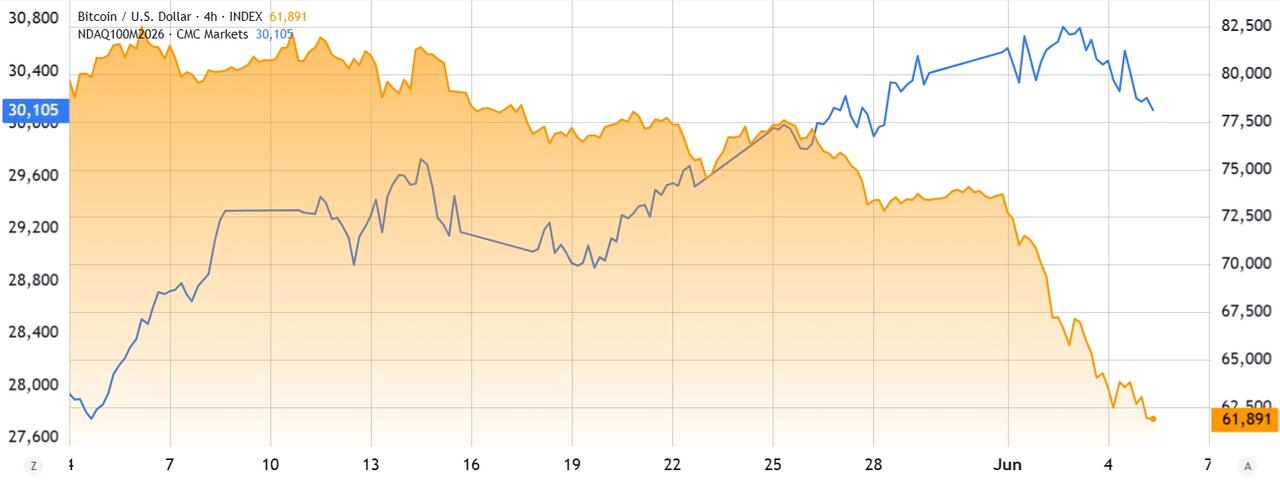
Bitcoin (BTC) is flashing a potentially unstable setup: as the price slid toward the low-$60,000s, bearish traders piled into leveraged shorts—creating what derivatives data suggests could become a $2.6 billion 'short squeeze' trigger if BTC reclaims the mid-$60,000 range.
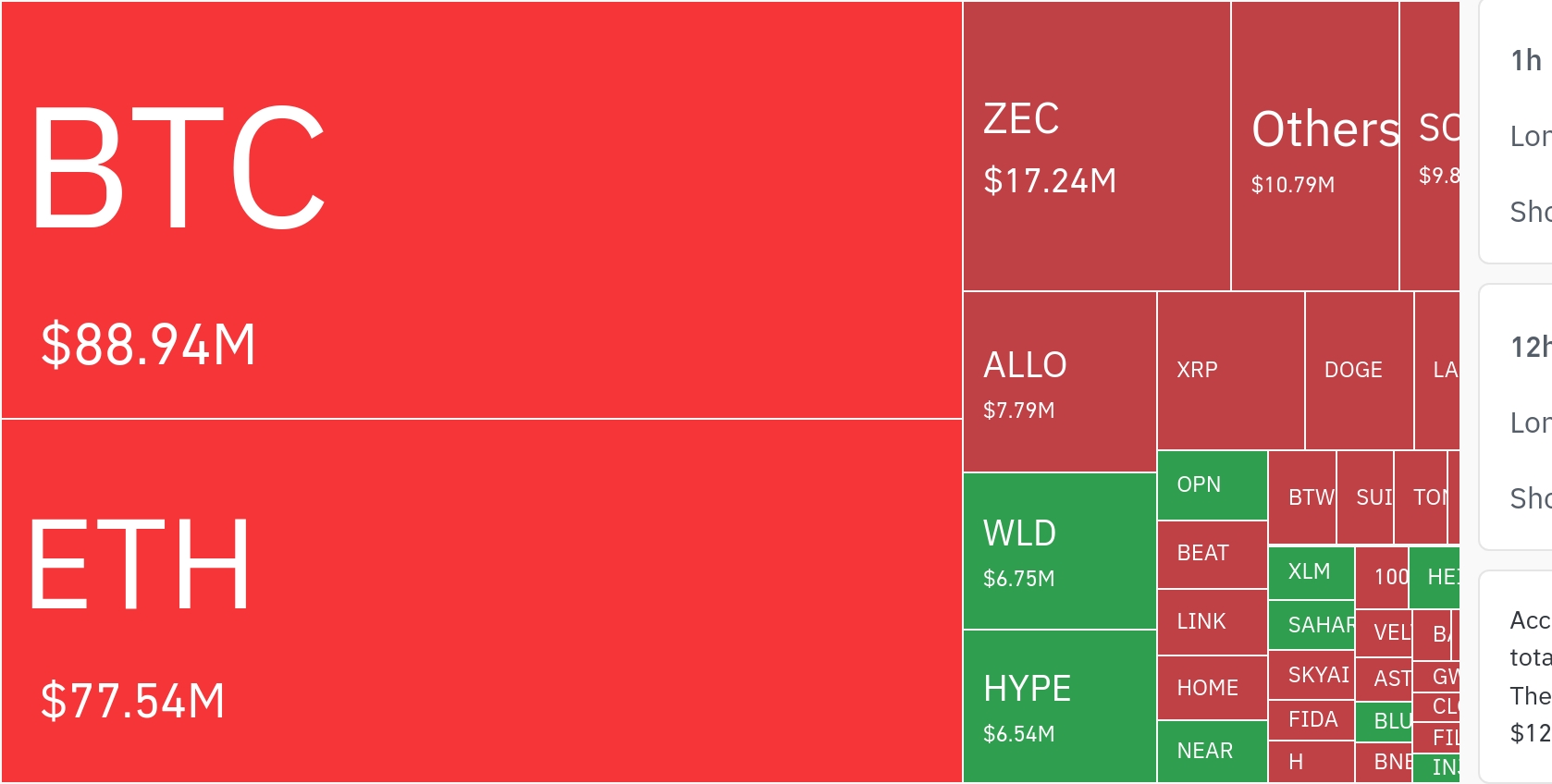
The latest leg down accelerated late last week. On Friday ET, BTC briefly sank to around $61,100, wiping out roughly $335 million in leveraged long positions as forced liquidations cascaded across major exchanges. After a roughly 21% decline from recent highs, sentiment has turned sharply pessimistic—yet that pessimism may now be the bulls’ strongest ally if price action turns upward.
Data from Coinglass shows short positioning has become heavily clustered between $63,000 and $66,000, a zone where many new bearish bets appear to have been opened following the sell-off. Liquidation estimates highlight a striking asymmetry: if BTC falls another 8% from around $62,000 to $57,000, potentially $1.2 billion in positions could be liquidated. But if BTC rebounds to $66,000, roughly $2.6 billion in shorts could be pushed into liquidation territory—more than double the downside figure.
That imbalance matters because large liquidation events can act as mechanical accelerants. When short positions are forcibly closed, traders must buy back BTC into rising prices, amplifying momentum and sometimes creating abrupt, high-velocity rallies—especially when liquidity is thin or positioning is one-sided.
The squeeze risk is unfolding alongside tentative stabilization in U.S.-listed spot Bitcoin ETF flows. After a record stretch of 13 consecutive days of net outflows, Thursday ET marked a modest net inflow of about $3 million, according to SoSoValue. While the amount is small compared with the roughly $5.1 billion pulled over the prior 15 trading days, it may signal the first pause in relentless selling pressure—though not enough, by itself, to confirm a durable trend reversal.
In derivatives, bearish conviction is visible in funding rates. The annualized funding rate for BTC perpetual futures has dropped to around negative 2%, indicating shorts are effectively paying less—or being paid—relative to longs. In more neutral regimes, annualized funding often sits in a positive 6% to 12% range, reflecting typical demand for long exposure. The current negative reading underscores unusually strong short-side appetite, even as much of the froth on the long side has already been cleared by liquidations.
Still, the market’s sensitivity depends on how aggressively those shorts are leveraged. If bears have kept leverage restrained and risk controls tight, the scale and speed of any squeeze could be more limited than headline liquidation estimates imply.
Macro cross-currents are also shaping flows. Bitcoin has underperformed the Nasdaq 100 in recent periods, but technology stocks—particularly the AI complex—have begun to wobble. Broadcom ($AVGO) fell 12.6% on Thursday ET after trimming its outlook for AI chip revenue in the second half of 2026, erasing roughly $280 billion in market value. Micron ($MU) dropped 7.8% and Arm ($ARM) slid 4.5%, adding to a broader risk-off impulse in AI-linked equities.
Beyond public markets, looming mega-IPOs have become another focal point for liquidity. With blockbuster offerings from companies such as SpaceX, Anthropic, and OpenAI widely anticipated, some investors have reportedly been raising cash—an environment in which liquid assets like BTC can become a ready source of funds.
Jeff Park, a partner at ParaFi Capital and an advisor to Bitwise, argued that the sell-off is less about crypto-specific catalysts and more about capital being redirected to what he called the market’s next 'hot ball of money' trades. “I don’t think Bitcoin is selling off because of MSTR,” Park wrote, referencing Strategy. “I think it’s being tapped to fund the market’s upcoming hot ball of money trades.” He added that once the AI-driven surge in demand for liquidity cools, capital could rotate back toward BTC at discounted valuations—and that the current correlation breakdown could eventually become 'fuel' for a future move.
Whether the primary driver is AI-sector overheating, IPO-related cash needs, or broader de-risking, the market structure is clear: concentrated short exposure above spot, paired with tentative signs that selling pressure may be cooling, makes positioning itself a source of risk. If spot ETF inflows stabilize—or if recent fears tied to Strategy’s reported sale of 32 BTC fade—BTC may not need a sustained bullish narrative to rise. A single sharp move through the $66,000 area could be enough to trip forced short covering and rapidly tilt the balance of momentum back toward the bulls.
🔎 Market Interpretation
- Setup: BTC slid into the low-$60K area, and traders responded by adding leveraged shorts—creating a fragile market structure where a rebound could force rapid short-covering.
- Liquidation asymmetry: Derivatives estimates suggest a move up toward $66K could trigger about $2.6B in short liquidations, versus about $1.2B in liquidations if BTC drops to roughly $57K. This skew implies upside may be more “explosive” if price reclaims key levels.
- Mechanics of a squeeze: If shorts are liquidated, they must buy BTC to close positions, potentially accelerating rallies—especially when liquidity is thin and positioning is crowded on one side.
- ETF flow tone shift (tentative): After 13 straight days of net outflows, U.S. spot BTC ETFs saw a small +$3M net inflow—minor versus the prior ~$5.1B outflow stretch, but notable as a possible pause in selling pressure.
- Funding rates confirm bearish crowding: BTC perpetual funding around -2% annualized signals elevated short appetite (and/or weak demand for longs) compared with typical positive funding regimes.
- Macro/liquidity drivers: Risk-off in AI-linked equities (e.g., sharp declines in AVGO/MU/ARM) and cash-raising ahead of potential mega-IPOs may be pulling liquidity from liquid assets like BTC.
- Key inflection: The article frames $63K–$66K as the short “crowding zone.” A decisive push through ~$66K is portrayed as the likely tripwire for forced buying.
💡 Strategic Points
- Watch the squeeze trigger level: Monitor price behavior and order flow as BTC approaches $65K–$66K; a fast break and hold above this region increases the probability of cascading short liquidations.
- Track derivatives stress signals: Rising open interest with persistently negative funding can indicate shorts are increasing leverage; sudden spikes in funding toward neutral/positive during a rally can signal shorts getting squeezed.
- Use liquidation zones as volatility map, not certainty: Liquidation estimates are scenario-based; actual squeeze magnitude depends on how leveraged shorts are and how tight their risk controls/stop levels are.
- ETF flows as a pressure gauge: Sustained stabilization or consecutive inflow days could reduce structural sell pressure; renewed heavy outflows may keep rallies capped and empower shorts.
- Macro catalysts matter even without crypto news: Continued weakness in AI/tech or IPO-driven cash needs can spur liquidation-driven moves in BTC since it is highly liquid and easy to sell quickly.
- Risk management implication: In crowded-short conditions, upside gaps can be violent; position sizing and stop placement should assume higher-than-normal intraday volatility around the $63K–$66K band.
📘 Glossary
- Short position: A trade that profits if price falls; the trader sells borrowed BTC (or uses derivatives) and must buy back later to close.
- Short squeeze: A rapid price rise that forces short sellers to buy back, creating a feedback loop that can accelerate the rally.
- Leverage: Borrowed exposure that magnifies gains and losses; higher leverage increases liquidation risk from small price moves.
- Liquidation: Forced position closure by an exchange when margin is insufficient, typically executed as a market buy/sell that can move price.
- Perpetual futures: Futures contracts without expiry that use funding payments to keep prices anchored to spot markets.
- Funding rate: Periodic payment between longs and shorts in perpetual futures; negative funding often indicates stronger short demand or bearish positioning.
- Open interest (OI): Total number of outstanding derivative contracts; rising OI can signal increasing leverage/positioning intensity.
- Spot Bitcoin ETF flows: Net creations/redemptions of ETF shares that imply net buying/selling of BTC by the fund, influencing market demand.





















Comment 0