

 News
News  Coin Information
  About us
  Customer Service



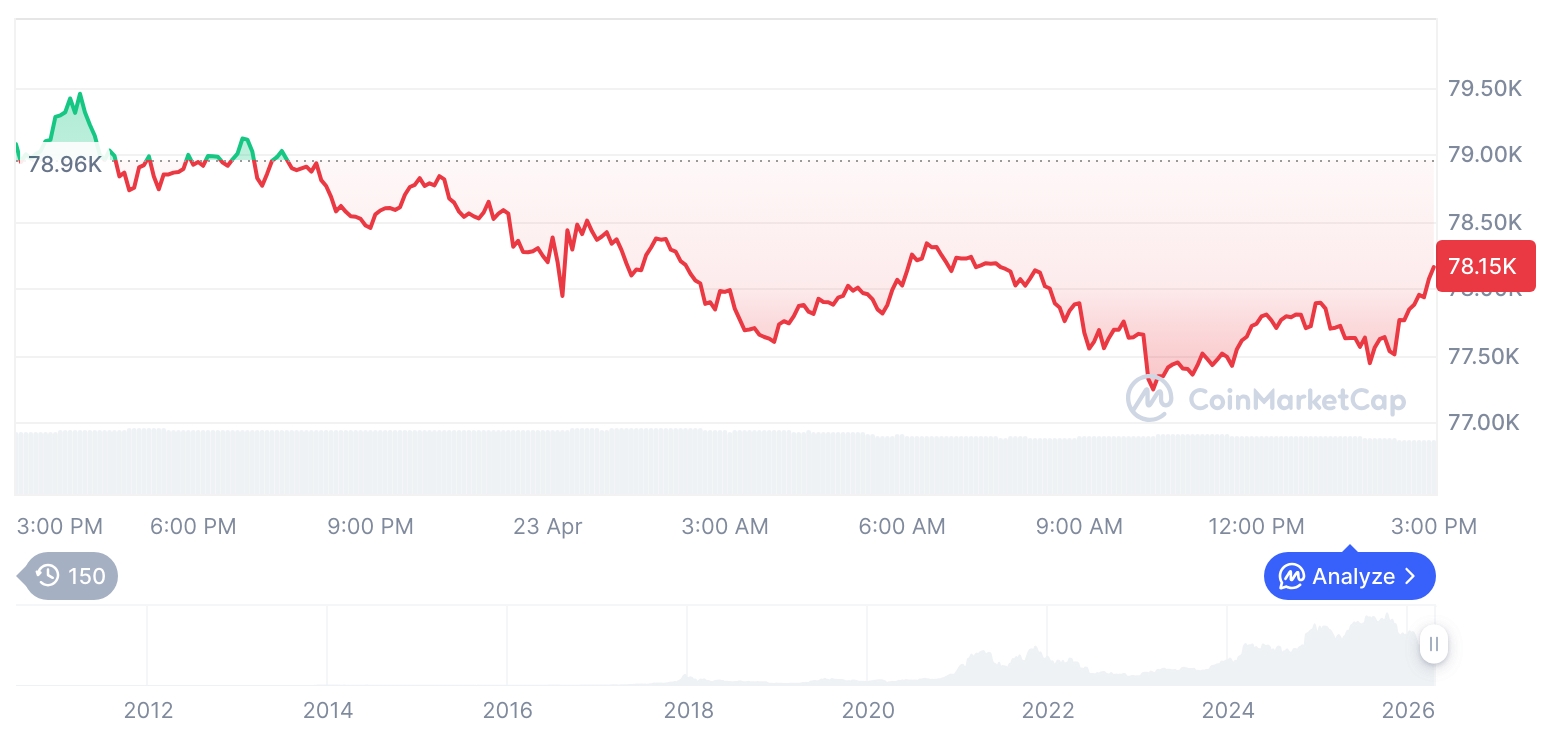
Michael Saylor, executive chairman of Strategy (MSTR) and the largest publicly traded holder of Bitcoin, recently sparked debate across the crypto market after ঘোষণা on X that the “crypto winter is over.” His statement came as Bitcoin (BTC) maintained a price above $78,000, a level first reached on April 22, according to CoinDesk data. The post, accompanied by a Game of Thrones-inspired image, reflects growing optimism among institutional investors, though not all analysts share the same outlook.
Strategy has continued to strengthen its position as a dominant corporate Bitcoin holder, recently acquiring an additional 13,927 BTC. This brings the company’s total holdings to an impressive 780,897 BTC, reinforcing its long-term bullish stance on Bitcoin. While Saylor’s confidence signals strength in the market, some experts caution that the recovery may not be uniform across the broader cryptocurrency ecosystem.
Market analyst Jason Fernandes noted that even if Bitcoin has exited a bearish phase, altcoins are still struggling and remain under pressure. This highlights a widening gap between Bitcoin’s performance and the rest of the crypto market. Meanwhile, Quantum Economics founder Mati Greenspan argued that the recent downturn should not be labeled a “crypto winter,” but rather a temporary correction within a larger bull cycle.
Greenspan believes Bitcoin has likely already hit its bottom and could continue trending upward. He also pointed to a significant shift in market dynamics driven by institutional adoption. According to him, the crypto industry has evolved through multiple phases, from early adopters in 2013 to retail investors in 2017, followed by institutional growth in 2021. The next major catalyst, he suggests, will be nation-state adoption.
Governments are increasingly exploring Bitcoin as part of their financial strategies. The United States is reportedly considering a strategic Bitcoin reserve, while already holding approximately 300,000 BTC. Countries like El Salvador continue accumulating Bitcoin, and others such as China and the United Kingdom hold substantial reserves. Additionally, regional entities in the U.S., including Wisconsin and New Jersey, are integrating Bitcoin exposure into public pension funds.
These developments suggest a broader shift toward mainstream acceptance of Bitcoin, potentially marking the beginning of a new era in the global financial system.


















Comment 0