

 News
News  Coin Information
  About us
  Customer Service


A short-lived relief rally may have cleared some of the market’s immediate positioning stress, but a deeper repricing is underway across both crypto and AI—one that is shifting valuations away from governance narratives and toward ‘control rights’ and ‘cash flow’, according to a new report from Alea Research.
The research firm argues that the recent pause in geopolitical tensions helped unwind portions of a crowded derivatives trade, yet it did not remove the structural risks still embedded in energy supply routes. At the same time, it says crypto markets are rapidly discounting DAO-led token stories, while frontier AI labs are tightening access to top-tier models—signaling a broader market pivot from storytelling to enforceable control over distribution and economics.
Macro risk eased—but core bottlenecks remain
Alea Research said renewed U.S.-Iran talks tied to a two-week ceasefire helped drive a sharp pullback in crude prices, reflecting reduced near-term fear of a wider conflict. But the firm cautioned that this is not the same as structural resolution. Key issues around the Strait of Hormuz—such as compensation, the risk of renewed strikes, and potential transit restrictions—remain unresolved, leaving a lingering geopolitical premium in physical energy markets even if ‘paper oil’ reprices quickly.
Rate expectations, the report added, also appear to be moving faster than the available evidence supports. The Federal Reserve is still holding its policy target range at 3.50%–3.75%, and the March dot plot implies a median policy rate near 3.4% by end-2026. Markets, however, have increasingly priced in a meaningful chance of rate cuts by December as ceasefire headlines cooled risk premiums.
On inflation, March CPI rose 3.3% year over year and core CPI 2.6%, slightly below expectations, but Alea Research noted that much of the upside move was tied to gasoline prices—making it difficult to read the print as a broad-based disinflation signal. In its view, investors are embedding an easing path that is “faster than justified.”
Crypto’s ‘DAO premium’ fades as markets demand enforceable rights
The report’s central thesis is that crypto’s internal market structure is changing: institutional participation may be deepening liquidity, but it is also compressing the valuation premium once assigned to token-based governance structures that lack clear legal control, operational authority, or robust economic claims.
Alea Research described this as a growing ‘DAO discount’—a market unwilling to pay for governance theater when decision rights and accountability are fragmented. It pointed to several cases as evidence. Across Protocol (ACX) offered tokenholders a choice between equity conversion or a USDC buyout. Balancer effectively moved away from its prior BAL emissions and veBAL tokenomics in favor of operational efficiency. Velora reworked its governance footprint and treasury structure after ending a key contract related to Aave (AAVE).
Aave itself became a focal point of the broader credibility debate after Chaos Labs signaled it would step back from a core risk-management role. Alea Research framed the development not merely as a partnership change, but as a reminder that control architecture and responsibility allocation increasingly shape market trust—especially for large onchain credit systems.
Token sales show harsh math: narrative alone hasn’t supported prices
Public token sales since 2025 have also delivered a sobering scorecard, the report said. Investors who broadly participated in major public offerings would have struggled to avoid significant losses, with multiple examples—FRAG, ALMANAK, SKATE, and LITKEY—down roughly 97%–98% versus sale prices. XPL fell less severely, but Alea Research argued that even there, post-listing narrative failed to act as a durable price floor.
The implication, according to the firm, is that the launchpad/IEO/ICO playbook is facing a valuation reset: ‘story-driven pricing’ is proving insufficient without clearer value accrual, credible buyers, and enforceable claims.
BTC, ETH, SOL: rebounds, but a more selective tape
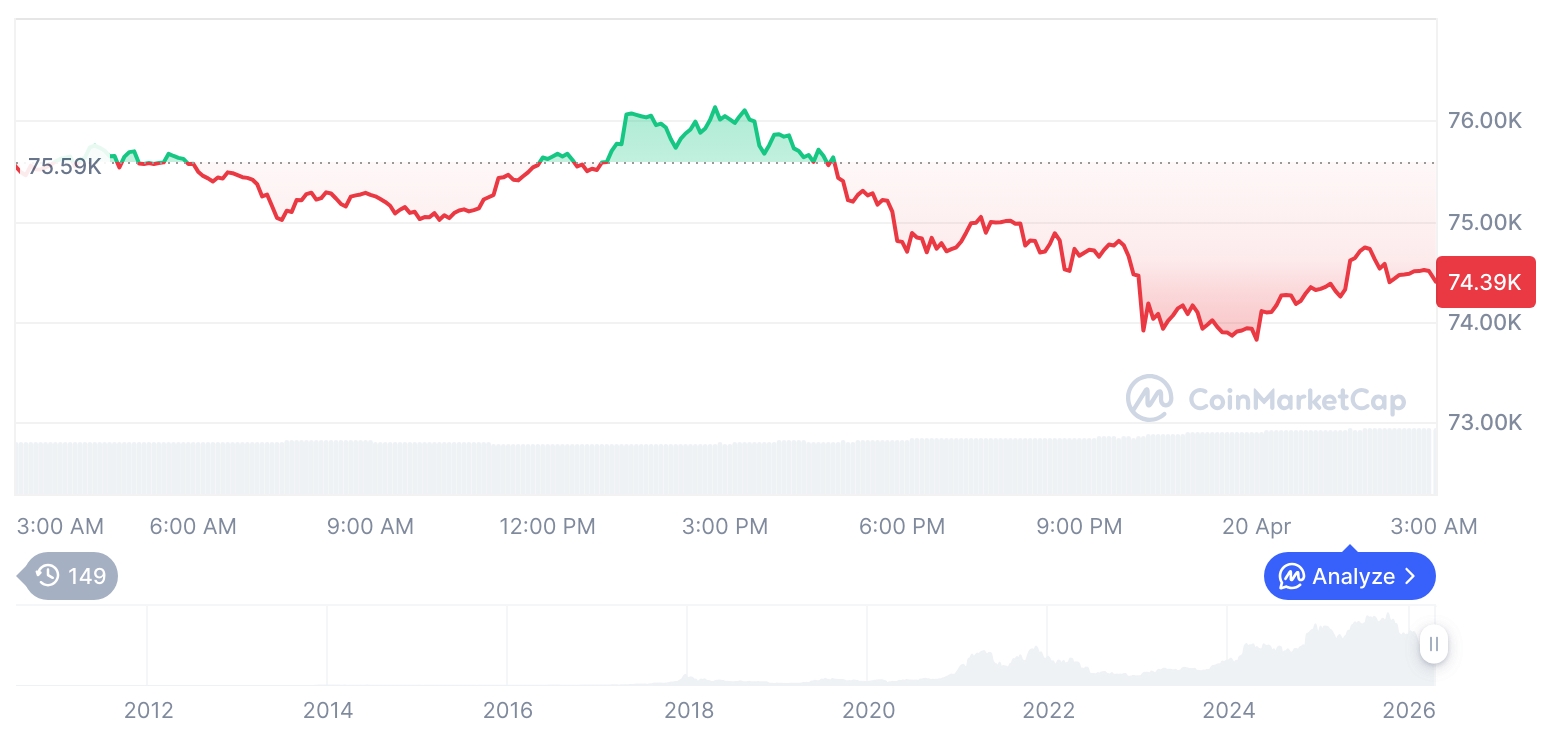
In majors, Bitcoin (BTC) rebounded to reclaim the $70,000 level amid improving risk sentiment. Alea Research interpreted the move less as confirmation of a new structural uptrend and more as a geopolitics-driven ‘short squeeze’—a rapid market move powered by forced covering rather than fundamental upside repricing.
Ethereum (ETH) traded above $2,000 and approached $2,200, though the report flagged lingering headwinds tied to technical stagnation and debate around Ethereum Foundation positioning, including discussion of stablecoin-related strategy. Longer term, it argued that a broader realignment linking L1 and L2 into a unified economic domain—an ‘Ethereum economic zone’—could become a more material catalyst if it translates into sustainable fee generation and clearer value capture.
Solana (SOL), meanwhile, has placed ecosystem security back at the center of its narrative following the “Drift incident,” the report said. The Solana Foundation has moved to strengthen threat monitoring and protocol verification through new security initiatives. Alea Research framed this as emblematic of a more mature phase for high-TVL chains: technological innovation alone is no longer enough, and credibility increasingly depends on operational control and resilient security infrastructure.
Zcash resurfaces on ‘post-quantum’ concerns
Zcash (ZEC) is drawing renewed attention as markets begin to more explicitly price ‘post-quantum’ risk following new quantum-related disclosures from Google, Alea Research said. Governance conversations in the Zcash ecosystem have increasingly emphasized recoverability and long-horizon security. The report also cited incremental easing of certain regulatory uncertainties, a push by Trust to pursue an ETF conversion, and substantial funding activity among development organizations—elements that, taken together, are expanding ZEC’s narrative beyond privacy into a broader “defensive tech asset” positioning.
AI shifts from open competition to access control
Alea Research said the AI sector is undergoing a parallel transition: frontier labs are focusing less on headline model performance and more on controlling who can access top models—and under what conditions. OpenAI has proposed a policy framework spanning industrial policy, taxation, power grid capacity, and audit structures. Anthropic has publicly acknowledged that deploying highly capable models can itself be a meaningful risk.
The report highlighted Anthropic’s “Mythos Preview system card,” which describes capabilities related to software vulnerability discovery and potential misuse that could exceed existing tools. As a result, Anthropic is limiting access through its “Project Glasswing” approach—granting availability to a restricted set of partners rather than broad public release. Alea Research noted that participants include major enterprises such as Amazon ($AMZN) via AWS, Microsoft ($MSFT), Nvidia ($NVDA), and Cisco ($CSCO), while permissionless financial infrastructure—crypto protocols and foundations—largely sits outside these access discussions.
That gap, it warned, could leave parts of the crypto ecosystem exposed as AI-driven offensive and defensive capabilities accelerate, potentially pushing DeFi further into a cyber risk blind spot.
‘Short squeezes’ still move prices—but hollow governance doesn’t
Even in the current tape, Alea Research emphasized that derivatives-driven squeezes remain a powerful driver. It cited Enjin Coin (ENJ) and Tensor (TNSR) as examples where elevated futures activity and open interest relative to spot conditions contributed to sharp rebounds. By contrast, tokens facing governance instability or unclear economic rights struggled to sustain upside. It pointed to Bittensor (TAO), which sold off amid controversy over centralization, and Aave (AAVE), where sentiment remained pressured following the contributor exit.
Ethena (ENA) was cited as a more constructive case: the project disclosed plans to diversify collateral reserves to bolster long-term operational resilience. Still, Alea Research said the market remains focused on assessing collateral quality and the realism of reserve management in stress scenarios.
Distribution is becoming the moat—across prediction markets and finance
The same control-and-distribution logic is emerging in prediction markets and consumer finance platforms, the report argued. FIFA’s move to appoint an official prediction market partner, and Polymarket’s efforts to strengthen in-house payment and liquidity controls, both underscore that end-user access and distribution networks are becoming defensible moats.
Alea Research also pointed to Robinhood ($HOOD) taking on a central distribution role in a public-sector account platform initiative as another sign of the shift: finance is moving toward app-native infrastructure, and platforms that own the customer relationship are positioned to capture structural advantages.
Bottom line: relief without resolution
Alea Research concluded that the market’s message is increasingly straightforward. Geopolitical tension may have cooled and helped defuse crowded positioning, but it did not eliminate underlying bottlenecks or inflation tail risks. In crypto, ‘governance’ as a label is no longer sufficient to command a premium; in AI, openness is giving way to access control.
In this environment, the firm said, premiums are more likely to accrue to assets with identifiable buyers, enforceable value accrual, clear ‘cash flow’, and credible catalysts. ‘Short squeezes’ may still move prices in the near term—but “dead governance shells,” it warned, are losing the ability to persuade markets.
















Comment 0