

 News
News  Coin Information
  About us
  Customer Service



Several mid-cap altcoins posted outsized weekly moves as fresh volume patterns highlighted where rallies appear backed by real demand—and where sell pressure may be accelerating. The latest 7-day cross-analysis of price and trading volume suggests that tokens such as DeAgentAI (AIA) and Render (RENDER) are showing a more convincing ‘follow-through’ move, while Solv Protocol (SOLV) is flashing signals typically associated with capitulation-style selling.
The framework used in the report divides assets into four buckets based on whether price and volume rose or fell together over the past week—an approach frequently used by traders to gauge the quality of a trend. In general, price gains accompanied by rising volume are viewed as a stronger confirmation of ‘spot demand’ and improving liquidity, while price gains on shrinking volume can point to ‘buyer fatigue.’ Conversely, falling prices with rising volume often indicate intensifying stop-loss activity and forced selling, and declines that occur alongside fading volume can imply a cooling market with dwindling attention.
‘Real rally’ signals: price up, volume up
AIA climbed 24% over the week while trading volume surged 100%, placing it among the clearest examples of a move supported by expanding participation. Algorand (ALGO) also advanced 21% with volume up 17%, while RENDER gained 15% as volume increased 32%. Analysts typically interpret this combination as more than a technical bounce, because higher turnover suggests new buyers are entering rather than existing holders simply marking prices higher in thin liquidity.
Possible ‘buyer fatigue’: price up, volume down
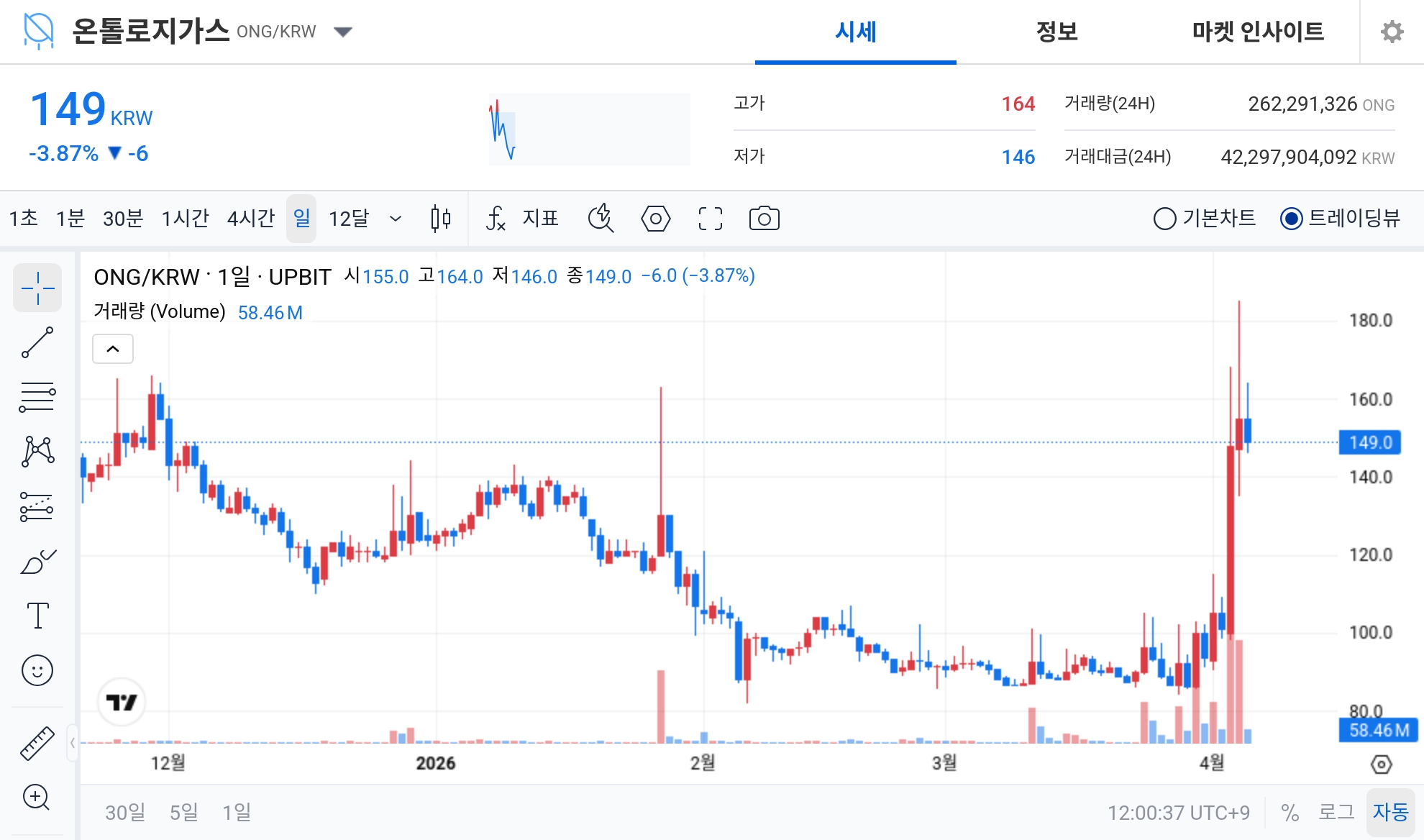
A separate group rose despite declining volume, a pattern often seen when upside momentum continues but participation narrows. “When price rises on lighter volume, the market can be more vulnerable to a short-term top,” one market observer noted, as follow-on demand becomes less certain. In this category, Binance-Pegged assets labeled “币安人生” rose 56% while volume fell 40%. Ontology Gas (ONG) climbed 37% as volume dropped 51%, and Bonfida (FIDA) gained 24% with volume down 21%.
‘Capitulation risk’: price down, volume up
The most cautionary setup appeared in tokens that fell sharply as volume swelled—often a sign that sellers are becoming more aggressive and stop-losses are being triggered. SOLV declined 27% with volume up 26%. GOAT slid 20% as volume rose 40%, while KGEN fell 19% with volume up 3%. If this volume expansion reflects forced liquidations rather than orderly rotation, traders typically expect elevated volatility to persist until selling pressure exhausts.
Cooling phase: price down, volume down
A fourth bucket showed both price and volume contracting, suggesting waning interest and weaker near-term catalysts. ZND dropped 51% while volume fell 40%. GIZA declined 11% with volume down 11%, and MAGMA slipped 8% as volume decreased 25%. In this setup, markets often drift sideways or continue to grind lower absent a clear trigger for renewed inflows.
Longer-term accumulation watchlist
The report also flagged several tokens under ongoing ‘accumulation’ monitoring—periods where volume can build without an immediate price breakout, sometimes associated with gradual positioning by larger buyers. Super Trust (SUT), tracked since Nov. 19, fell 12% on the week while volume rose 38%, consistent with dip-buying interest despite price weakness. Stacks (STX), tracked since Jan. 6, was largely unchanged (+0.26%) with volume up 12%, pointing to a wait-and-see market. RENDER, tracked since Jan. 7, remained one of the clearer accumulation-to-breakout examples, with price up 14% and volume up 32%.
New accumulation candidates
Among newly added names, Bella Protocol (BEL) rose 10% but saw volume collapse 88%, implying the move may lack broad participation. Step App (FITFI) climbed 15% with volume down 23%, also suggesting fading short-term buying intensity. Switchboard (SWTCH) fell 17% while volume jumped 43%, a combination typically associated with expanding sell pressure.
Overall, the week’s data underscored a familiar divergence in altcoin markets: a handful of tokens are moving higher with improving liquidity—often considered a more durable setup—while others are rallying on thinning volume or sliding on heavier turnover, both of which can precede sharper reversals. Market participants will likely watch whether volume continues to confirm breakouts in leaders like AIA and RENDER, and whether selling intensity in SOLV and other decliners begins to fade as broader risk appetite evolves.
🔎 Market Interpretation
- Volume-confirmed leaders: DeAgentAI (AIA) and Render (RENDER) rose alongside expanding volume, a classic signal that the move is supported by broader participation rather than thin liquidity.
- Divergent altcoin tape: The market is split between (1) tokens with improving liquidity and trend confirmation, and (2) tokens showing waning participation on rallies or intensifying sell pressure on declines—both scenarios that can precede reversals.
- Risk flag—capitulation-style selling: Solv Protocol (SOLV) fell while volume rose, a pattern often linked to stop-loss triggers, forced selling, or liquidations; volatility typically stays elevated until sell pressure exhausts.
- Cooling cohort: Assets where both price and volume fell suggest declining attention and weak catalysts; these often drift or grind lower without a new narrative or inflow trigger.
- Accumulation lens: Some tokens show rising volume without clean upside (or even with price weakness), interpreted as potential stealth positioning—though not yet a breakout signal by itself.
💡 Strategic Points
- Trend quality check: Prefer setups where price ↑ + volume ↑ (e.g., AIA +24% with volume +100%; RENDER +15% with volume +32%; ALGO +21% with volume +17%) as they imply stronger spot demand and better liquidity.
- Rally risk management: Treat price ↑ + volume ↓ as vulnerable to short-term tops (buyer fatigue). Examples include “币安人生” (+56%, volume −40%), ONG (+37%, volume −51%), and FIDA (+24%, volume −21%). Consider tighter invalidation levels and avoid chasing breakouts without volume confirmation.
- Downtrend caution: In price ↓ + volume ↑ names (SOLV −27% with volume +26%; GOAT −20% with volume +40%; KGEN −19% with volume +3%), expect whipsaws. Many traders wait for volume to peak-and-fade or for price to reclaim key levels before attempting entries.
- Cooling-phase approach: For price ↓ + volume ↓ (e.g., ZND −51% with volume −40%), strategies often shift to patience: watch for basing patterns, new catalysts, or a volume re-expansion before assuming a reversal.
- Accumulation watchlist takeaways:
- SUT: Price −12% while volume +38% may indicate dip-buying; confirmation would be stabilization plus continued constructive volume.
- STX: Flat price (+0.26%) with volume +12% suggests positioning without conviction—monitor for breakout/ breakdown triggers.
- RENDER: Highlighted as a clearer accumulation-to-breakout profile (price +14% to +15% with volume +32%).
- New candidates—participation test:
- BEL: Price +10% but volume −88% signals a potentially fragile move; needs volume rebound to validate.
- FITFI: Price +15% with volume −23% suggests fading short-term buying intensity.
- SWTCH: Price −17% with volume +43% leans bearish (expanding sell pressure) until volume eases or price base forms.
- Practical checklist for the next week: (1) Do leaders keep volume expanding on up days? (2) Do “fatigue” names see volume return or roll over? (3) Do capitulation candidates show a volume climax followed by stabilization?
📘 Glossary
- Price ↑ + Volume ↑ (Confirmation): A move where rising turnover supports the price trend, often interpreted as healthier demand and liquidity.
- Price ↑ + Volume ↓ (Buyer fatigue): Prices rise while participation shrinks; can indicate diminishing marginal buyers and higher topping risk.
- Price ↓ + Volume ↑ (Capitulation risk): Selling accelerates as volume expands; may reflect stop-loss cascades, forced liquidations, or panic selling.
- Price ↓ + Volume ↓ (Cooling phase): Both metrics contract, implying reduced attention; often leads to sideways drift or gradual decline.
- Spot demand: Buying in the spot market (non-leveraged or not purely derivatives-driven), typically viewed as more durable.
- Liquidity: How easily an asset can be bought/sold without large price impact; often improves with higher volume.
- Stop-loss activity: Automated or discretionary sell orders triggered at predefined prices, sometimes amplifying down moves.
- Forced selling / liquidations: Sales compelled by margin calls or leverage liquidation mechanisms, commonly associated with sharp volume spikes.
- Accumulation: A phase where larger participants may build positions over time; volume can rise before price breaks out.
- Follow-through: Continued price movement after an initial jump, ideally supported by sustained or rising volume.



















Comment 0