

 News
News  Coin Information
  About us
  Customer Service


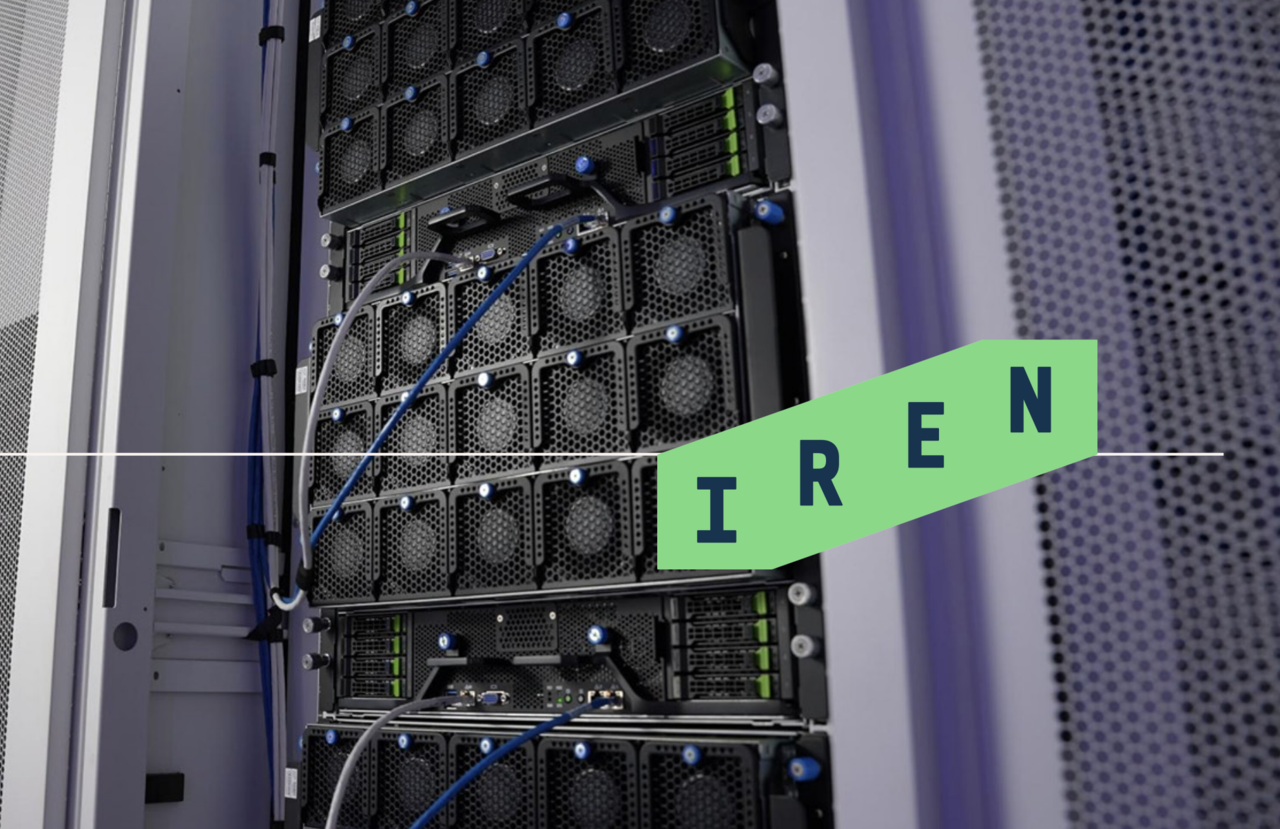
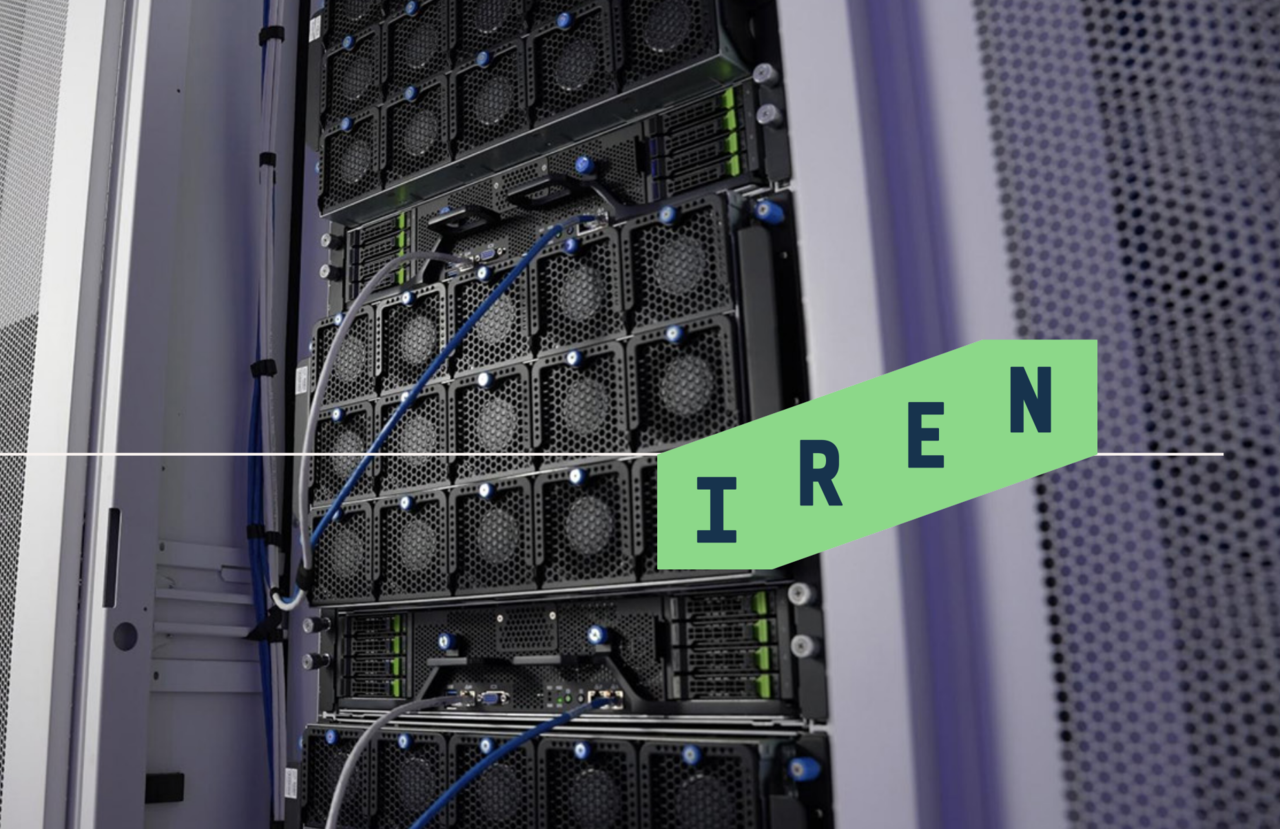
IREN ($IREN) is seeing heightened share-price volatility as it accelerates a high-stakes pivot from Bitcoin mining to AI cloud infrastructure, a transition investors increasingly view as a race between scale-up execution and valuation expectations.
In the latest session, IREN shares traded in a wide range between $14.72 and $76.87 on a 52-week basis, with the stock recently closing at $36.29, down on the day. Volume topped 34 million shares, underscoring intense interest—though price action suggests sentiment remains unsettled as the company attempts to reposition itself within the fast-moving AI infrastructure market.
A sharp divide has emerged between valuation models and sell-side optimism. GuruFocus put IREN’s intrinsic value at $13.21, implying the stock is roughly 166% overvalued at current levels. By contrast, market analysts cited in multiple reports have clustered around an average price target in the low $80s—roughly $81 to $83—arguing that AI-related revenue could materially re-rate the company over the next two years. The gap highlights how much of IREN’s investment case now hinges on its ability to deliver a large-scale buildout on an aggressive timeline.
IREN recently said it has secured $2.8 billion in multi-year AI cloud contracts with a roster of prominent AI ecosystem players, including Microsoft ($MSFT), Nvidia ($NVDA), Perplexity, Figure AI, and Together AI. Off the back of those agreements, the company lifted its target for AI cloud annual revenue by the end of 2026 to more than $4.0 billion, up from a prior goal of $3.7 billion.
Zacks framed the new AI cloud business as a potential 'second revenue engine' alongside the legacy mining operation, projecting revenue growth of 47.5% in fiscal 2026 and a further jump of 306.7% in 2027 as capacity comes online. However, Zacks also noted that near-term estimates have been revised lower over the past week, reflecting uncertainty around the pace of delivery and early-stage margin dynamics. IREN has indicated that roughly 85% of its more-than-$4 billion annual recurring revenue (ARR) ambition is already supported by multi-year contracts—an important de-risking signal—yet investors remain focused on the harder part: actually building and powering the infrastructure.
The expansion plan is unusually steep. IREN reported having just 3 megawatts (MW) of AI cloud capacity in 2025, but it is targeting 480MW by the end of 2026 and roughly 1.2 gigawatts (GW)—or 1,200MW—by 2027. It also plans to increase GPU inventory from 23,000 units by September 2025 to 150,000 by the end of 2026, a more than sixfold increase, as demand for compute continues to outstrip supply across the sector.
Industry commentary has been blunt about the challenge. Ad-hoc-news and other market observers have stressed that IREN’s roadmap depends on 'perfect execution'—a tall order given the interlocking constraints of power procurement, data center construction timelines, permitting, cooling systems, and the procurement of high-end GPUs. Even for well-capitalized operators, sourcing accelerators such as Nvidia’s H100 and A100 has been difficult amid persistent shortages and elevated pricing, while grid interconnection and power availability can become bottlenecks as facilities scale.
Those uncertainties are showing up in derivatives markets. IREN’s implied volatility stands at 132.62, placing it among the top decile historically and signaling expectations for continued large price swings. The put/call ratio around 0.84—well below a longer-term average of 1.89—suggests bearish hedging pressure has eased relative to past periods, but positioning still implies a market that lacks high conviction in either direction.
Broader sector dynamics are also influencing the tape. 24/7 Wall St. attributed part of IREN’s recent weakness—down about 4% in the referenced move—to a wider pullback in 'neo-cloud' and AI infrastructure equities, which have been sensitive to changes in risk appetite and rate expectations. At roughly half of its 52-week high of $76.87 but still well above the 52-week low of $14.72, IREN sits at an awkward midpoint: priced for meaningful AI upside, yet vulnerable to setbacks that would force investors to discount future cash flows more heavily.
Strategically, the pivot is designed to reduce reliance on the cyclicality of Bitcoin (BTC) mining economics and to monetize what IREN already controls: energy access and data center sites, particularly in North America, with an emphasis on renewable power. Management is effectively trying to convert a mining footprint into AI-ready compute at a time when hyperscalers and model developers are competing for capacity. Still, the market has not fully embraced IREN as a pure-play AI cloud provider; instead, many investors continue to treat it as a hybrid—part miner, part AI infrastructure—an identity that can weigh on multiples and amplify volatility during the transition.
Analyst bullishness largely rests on a medium-term scenario in which AI cloud revenue becomes visible in quarterly results and the company approaches its 2026–2027 capacity milestones without major delays or cost overruns. More cautious assessments, including the GuruFocus intrinsic value model and the recent downward nudge in near-term estimates flagged by Zacks, reflect concerns that financing costs, construction timelines, and GPU availability could disrupt that trajectory.
For investors, the next inflection points are likely to come not from headlines about contract wins alone, but from operational proof: disclosed AI cloud revenue mix, capacity utilization, GPU deployment pace, and the cadence of bringing new MW online. Until IREN demonstrates repeatable execution at scale, the stock’s story—compelling growth potential paired with elevated delivery risk—appears set to keep volatility high.
🔎 Market Interpretation
- High-volatility repricing: IREN is being valued less like a steady BTC miner and more like an early-stage AI infrastructure scale-up. That shift is driving large swings as investors re-score the company on execution risk rather than mining cycle dynamics.
- Wide valuation dispersion: Intrinsic-value models (e.g., GuruFocus at ~$13.21) imply substantial overvaluation, while sell-side targets (~$81–$83) reflect a bullish “AI re-rating” scenario—showing the stock is effectively trading on forward capacity delivery.
- Contracts are supportive, delivery is decisive: The $2.8B multi-year AI cloud contracts and management’s claim that ~85% of a $4B+ ARR target is contracted help de-risk demand, but the market remains focused on buildout feasibility (power, permitting, construction, GPUs).
- Derivatives signal continued turbulence: Implied volatility (~132.62) points to expectations of outsized moves; a put/call ratio near 0.84 suggests less bearish hedging than the longer-term norm, but not strong conviction in either direction.
- Macro/sector pressure matters: Pullbacks in “neo-cloud” and AI infrastructure equities (risk appetite, rates) are influencing IREN’s tape, leaving it “priced for upside, vulnerable to setbacks.”
💡 Strategic Points
- Core transition thesis: Reduce dependence on Bitcoin mining cyclicality by monetizing existing advantages—energy access and data center sites—into AI-ready compute infrastructure.
- Scale-up targets are extreme: AI cloud capacity is planned to rise from ~3MW (2025) to 480MW (end-2026) and ~1.2GW (2027). This magnitude of ramp makes timelines, capex discipline, and construction execution central to the equity story.
- GPU supply is a key constraint: Plans to expand from ~23,000 GPUs (Sep 2025) to 150,000 (end-2026) run into industry-wide accelerator scarcity (e.g., Nvidia H100/A100), elevated pricing, and delivery uncertainty.
- Revenue trajectory is highly back-end loaded: Forecasts cited (e.g., Zacks) expect a large jump as capacity comes online (47.5% growth in FY2026, then 306.7% in 2027), implying that near-term quarters may not validate the long-term narrative and can destabilize sentiment.
- Hybrid identity discount risk: Until AI revenue becomes a clear majority and operations look repeatable, the market may keep applying “hybrid” multiples (miner + AI infra), amplifying volatility vs. pure-play AI infrastructure peers.
- Near-term proof points to watch:
- Quarterly AI cloud revenue disclosure and mix vs. mining
- MW brought online vs. schedule; permitting and interconnection updates
- Utilization and customer ramps tied to signed contracts
- GPU delivery/install cadence and any substitution strategy
- Unit economics (power cost, cooling efficiency, early margins) and any capex/financing revisions
📘 Glossary
- AI cloud infrastructure: Data centers optimized to provide GPU/accelerator compute to AI developers via hosted or managed services.
- MW / GW (Megawatt / Gigawatt): Measures of power capacity available to run data center equipment; 1 GW = 1,000 MW.
- GPU (Graphics Processing Unit): High-parallel compute chips used for training/inference of AI models; supply is often a bottleneck.
- ARR (Annual Recurring Revenue): Run-rate of contracted recurring revenue, often used to gauge stability and visibility for subscription/contract businesses.
- Implied volatility: Options-implied estimate of future price variability; higher values indicate expectations of larger swings.
- Put/Call ratio: Options metric comparing puts (downside protection/bearish bets) to calls (upside exposure); lower ratios can imply reduced bearish hedging.
- Intrinsic value: Model-based estimate of a company’s “fair value” based on fundamentals (cash flows, growth, risk), not current market price.
- Re-rating: A shift in valuation multiple (e.g., price-to-sales) as the market changes how it categorizes or expects growth from a company.
- Hyperscalers: Very large cloud providers (e.g., Microsoft, AWS, Google) operating massive data center fleets and buying compute at scale.
- Grid interconnection: The process of connecting a facility to the electrical grid; delays can limit how fast new data center capacity can go live.














Comment 0