

 News
News  Coin Information
  About us
  Customer Service


 Add as a preferred source on Google

SpaceX’s newly disclosed Bitcoin (BTC) stash is resetting expectations for corporate crypto demand, with traders and analysts now watching whether a planned Nasdaq debut could turn the aerospace company into the next major 'bitcoin treasury' buyer.
In an S-1 registration statement filed with the U.S. Securities and Exchange Commission (SEC) on May 20, SpaceX said it held 18,712 BTC as of March 31. The company put the position’s fair value at $1.293 billion at quarter-end; at current prices near $76,000, the holdings would be worth roughly $1.4 billion. The filing marks the first official confirmation of SpaceX’s Bitcoin exposure at this scale, and it arrives as the company is expected to pursue a public listing next month.
The key question for markets is what happens after the IPO: whether SpaceX treats Bitcoin as a legacy balance-sheet position—or as an asset it plans to accumulate aggressively using fresh proceeds. In its filing, SpaceX described Bitcoin not as a short-term liquid holding but as a 'Strategic Reserve,' language that investors typically associate with long-duration intent rather than opportunistic trading. The company also said it has been building the position over roughly five years, reinforcing a narrative of steady accumulation.
That framing has fueled speculation that an IPO could introduce a new structural source of demand if even a small portion of the offering’s proceeds is allocated to Bitcoin. Local media estimates put the potential deal size in a wide $40 billion to $80 billion range, which—if realized—would rank among the largest public offerings on record. Market participants point to the precedent set by Strategy ($MSTR), whose sustained purchases helped shape corporate participation in prior cycles. A SpaceX bid, even at a smaller scale, would matter because it would represent incremental, recurring demand rather than one-off buying.
SpaceX disclosed a total acquisition cost of approximately $661 million, implying an average purchase price of about $35,324 per Bitcoin. At current levels, that translates into an unrealized gain of around $760 million, or roughly +115%. By volume, the position would place SpaceX among the world’s largest corporate holders and well above Tesla ($TSLA), which has previously reported holding 11,509 BTC. Combined, the two Musk-linked companies would control more than 30,000 BTC, worth roughly $2.3 billion at current market prices.
The scale of the holdings also surprised observers who had relied on on-chain attribution. Arkham Intelligence had at one point estimated SpaceX-controlled wallets closer to roughly 6,000 BTC, far below the figure reported in the S-1. The shortfall highlights a familiar limitation of public blockchain tracing: large entities can use multiple wallets, custodians, and 'over-the-counter (OTC)' execution to reduce visibility. Still, claims that SpaceX has “never sold” Bitcoin remain difficult to verify. Arkham’s historical tracking has shown periods where attributed balances appeared to fall, though the S-1 indicates the company’s reported holdings were unchanged from late 2025 through the end of the first quarter.
Another focal point is how the position will flow through SpaceX’s financial statements after listing. SpaceX said it accounts for Bitcoin under a fair-value model, an approach enabled by updated guidance from the Financial Accounting Standards Board (FASB) beginning in 2025. Supporters argue the change makes corporate holding more attractive because unrealized gains can be recognized rather than trapped off the income statement. But the trade-off is clearer volatility: SpaceX’s Bitcoin fair value fell from $1.637 billion at year-end to $1.293 billion by March 31, a decline of more than $300 million despite no change in reported coin count. For future shareholders of SpaceX’s stock—reported as 'SPCX'—that means exposure to Bitcoin’s drawdowns as well as its rallies.
The disclosure lands amid a broader acceleration in corporate Bitcoin adoption. By late 2025, an estimated 170 to 190 public companies globally held Bitcoin as a treasury asset, together controlling roughly 5% of circulating supply, according to industry tallies cited in Korean media. Adoption also gained political tailwinds after President Trump signed an executive order related to a U.S. 'Strategic Bitcoin Reserve (SBR)' in March last year, a move proponents say helped normalize the asset in institutional conversations.
At the same time, some social-media claims around SpaceX have been overstated. While SpaceX has been associated with ambitious target valuations, its Bitcoin position—roughly $1.4 billion at current prices—is not on its own large enough to justify labels suggesting a “trillion-dollar bitcoin company.” Market participants caution that conflating enterprise-value ambitions with treasury holdings obscures the actual scale of BTC exposure.
Looking ahead, SpaceX’s listing is shaping up as a consequential variable for Bitcoin’s second-half 2026 supply-and-demand balance. Investors could treat SPCX as a 'hybrid asset'—offering exposure to the space industry while embedding direct sensitivity to Bitcoin—potentially diverting some flows that might otherwise go to spot Bitcoin ETFs or Strategy ($MSTR). The company’s sizable unrealized gains could also influence IPO pricing by signaling balance-sheet strength, though that same linkage may amplify volatility if Bitcoin swings sharply around the listing window.
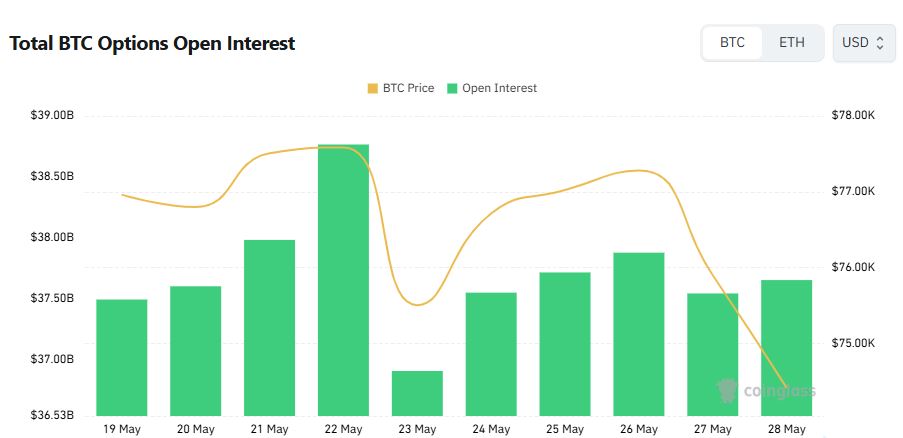
With Bitcoin having recently dipped to around $74,500 earlier this month—its lowest level in roughly two months—traders say timing could be critical. Ultimately, the market’s attention will center on the IPO timetable, pricing, and, most importantly, whether SpaceX turns its 'Strategic Reserve' language into post-listing purchases that could reshape incremental demand in the next phase of the cycle.













Comment 0