
 Add as a preferred source on Google
Bitcoin developer protections face tougher path over next two years as technical understanding lags
Bitcoin developer protections face weaker legislative prospects over the next two years, Zach Cohen said, highlighting policymakers’ technical understanding and a tax exemption for small payments.


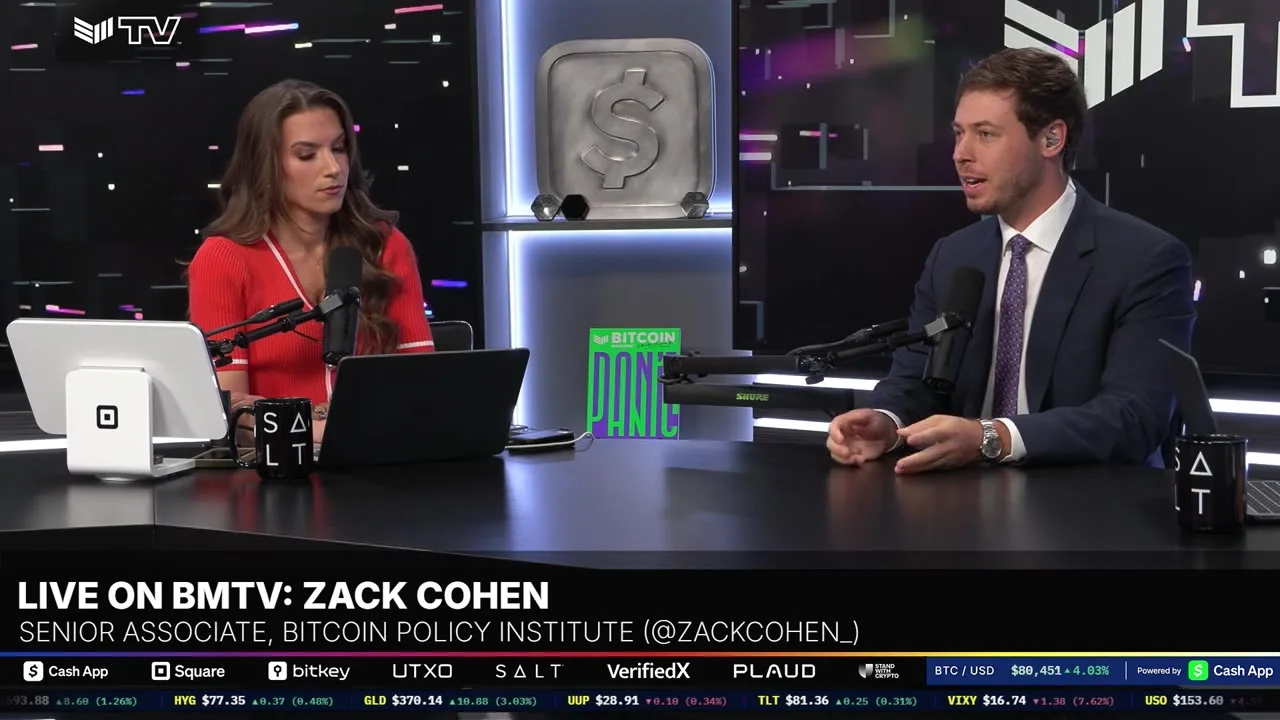
US legislation protecting Bitcoin developers faces a tougher path over the next two years, with policymakers’ understanding of the technology remaining central to the debate. A key issue is whether developers who do not hold users’ funds should be held responsible for those users’ activities.
In a Bitcoin Magazine interview on November 4, Zach Cohen, senior associate at the Bitcoin Policy Institute, said the chances of securing developer protections in legislation over the next two years had fallen substantially after the Clarity Act stalled in the Senate. He said the setback would not stop the institute’s efforts to explain the technology to policymakers.
Cohen identified the Senate’s cloture requirement as a major obstacle: ending debate to advance to a vote requires 60 votes, a threshold the Clarity Act never reached. While the GENIUS legislation passed and was signed by President Trump, he said, Clarity remained blocked. Senate numbers and the future of the filibuster would therefore be important to watch.
The legislative debate gave the Bitcoin Policy Institute opportunities to explain to congressional offices how Bitcoin differs from other cryptocurrencies and why open-source developers need protection, Cohen said. He expected discussions to continue given the crypto industry’s political influence and widespread adoption in the United States, although their focus and tone could shift and resistance could increase.
Cohen argued that pursuing non-custodial developers over their users’ conduct misunderstands how the technology works. These developers create software without holding users’ funds. He said lawmakers and federal agencies needed to understand why rules built around banks and other intermediaries do not readily fit that model.
He also distinguished lasting statutory protection from the administration’s enforcement approach. The Blockchain Regulatory Certainty Act, incorporated into the Clarity Act to protect non-custodial developers, currently lacked a path forward, he said. However, Cohen said there had been no additional prosecutions of non-custodial developers under the Trump administration and that he did not expect that approach to change over the next two years.
Cohen also highlighted a de minimis tax exemption for small Bitcoin payments, intended to let Americans make purchases without tracking a taxable transaction every time they buy coffee. He said such an exemption could encourage Bitcoin to circulate as a means of payment, and that research commissioned by the institute on the subject was expected soon. Explaining Bitcoin’s role as a store of value or medium of exchange, he added, should reflect the interests of the audience.
Riza Dagoc
Riza Dagoc reports on regulation, investing and the digital-asset business for TokenPost. Send corrections or tips to info@tokenpost.com.