
 Add as a preferred source on Google
Leopold Aschenbrenner Says Asteroid Mining Could Flood Gold Markets
The AI investor letter argues asteroid mining could weaken gold’s scarcity, although returning enough metal to affect prices remains far beyond current capabilities.

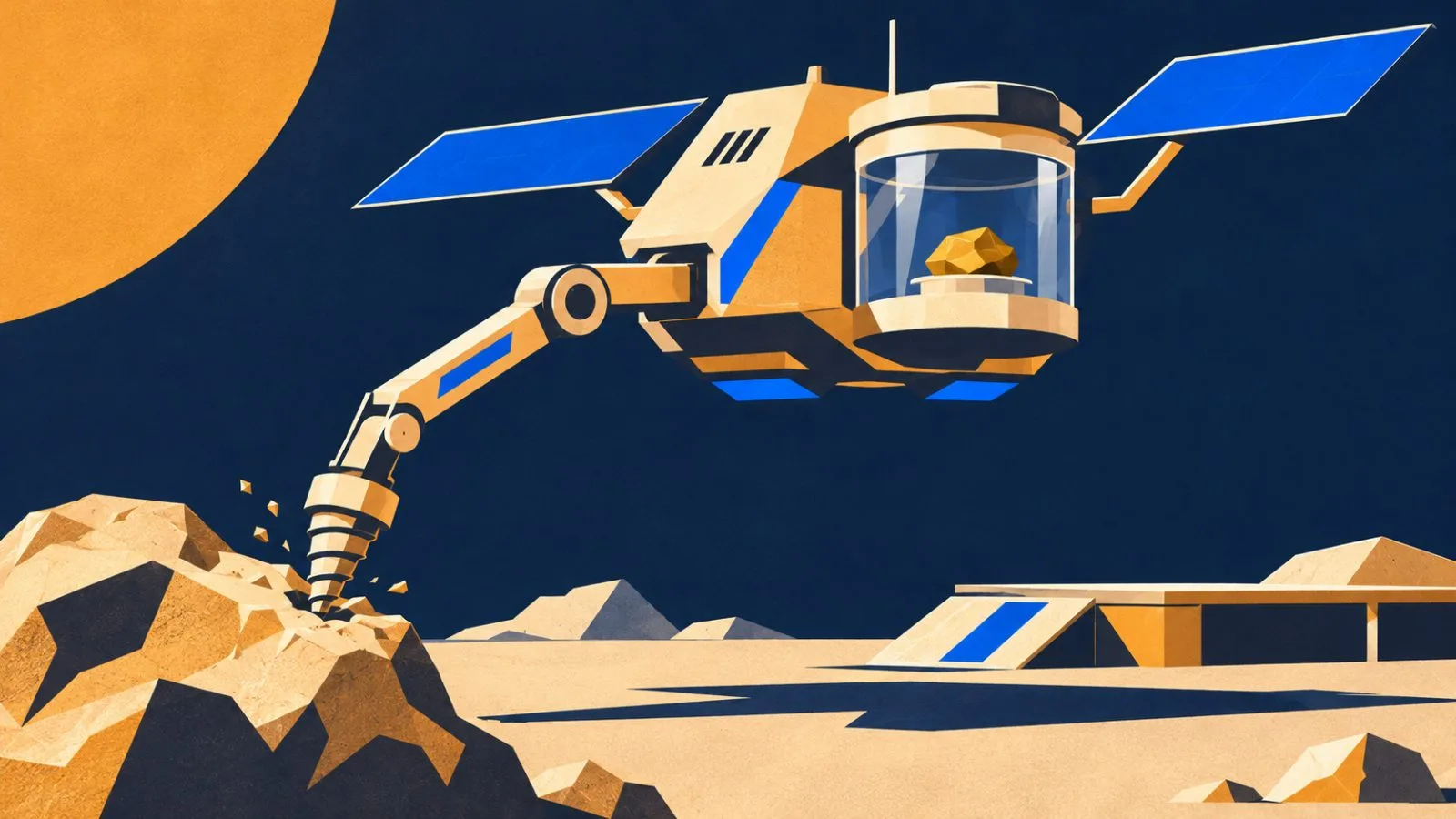
Leopold Aschenbrenner argues that asteroid mining could eventually undermine gold’s scarcity and pressure prices, but the scale of space operations needed remains far beyond current capabilities.
The former OpenAI researcher made the argument in a 167-page investor letter. He wrote that if artificial intelligence accelerates technological progress enough to enable asteroid mining in the early 2030s, gold could become abundant and lose value.
A near-Earth asteroid known as 1986 DA is about 2.8 kilometers wide and is estimated to contain roughly 18,800 metric tons of gold. That would equal about 8.4% of the 224,200 metric tons humans have mined to date, or approximately five years of mine production.
The concentration estimates vary widely. Iron meteorites average about 0.6 grams of gold per metric ton of metal, compared with 1.29 grams per metric ton in open-pit gold mines on Earth. The highest recorded meteorite concentration is 8.74 grams per metric ton.
The larger asteroid 16 Psyche has a maximum width of about 280 kilometers, with metal estimated to account for 30% to 60% of its volume. Applying the same concentration estimates would imply more than 10,000 times the gold already mined on Earth.
NASA’s mission to 16 Psyche is scheduled to begin in August 2029. The spacecraft is expected to spend about two years orbiting the asteroid, photographing it and studying its composition. The mission is not designed to mine the asteroid or return materials to Earth.
Halving gold prices would require about 8,000 metric tons of additional gold to reach Earth each year. At a concentration of 0.6 grams per metric ton, that would mean processing about 13.3 billion metric tons of metal, or 5.5 times annual global iron-ore production. Even at the highest recorded concentration, processing would still require about 900 million metric tons.
Current space-return capabilities are nowhere near that scale. NASA’s OSIRIS-REx mission returned 121.6 grams of asteroid material after seven years and more than $1 billion in spending.
AstroForge co-founders have identified platinum-group metals such as platinum, rhodium and iridium as more commercially relevant space-mining targets than gold. They described gold as marginal and did not examine it further.
The market could react before any asteroid material reaches Earth. Central banks, gold-bar and coin holders, exchange-traded funds and over-the-counter investors hold about 45% of the world’s gold, so a shift in expectations about future supply could affect prices before deliveries begin.
Enna Lee
ReporterEnna Lee reports on investing and digital-asset markets for TokenPost. Send corrections or tips to info@tokenpost.com.