
 Add as a preferred source on Google
Bitcoin faces rate-hike pressure as liquidity expansion shapes its long-term case
James Lavish says rate-hike concerns are weighing on Bitcoin, while Fed and Treasury liquidity operations remain central to its longer-term investment case.


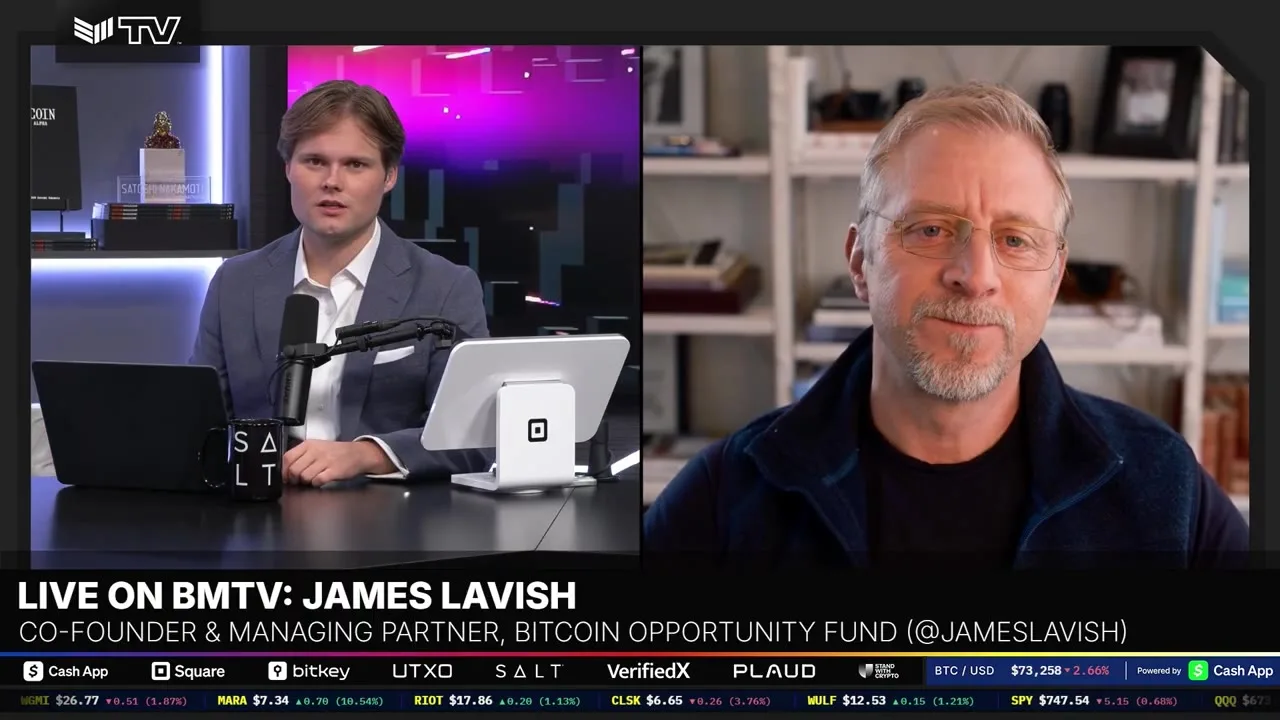
Bitcoin remains sensitive to rising interest rates in the short term, while its longer-term investment case rests on expanding liquidity and money supply. U.S. fiscal pressures and energy-driven inflation make the Federal Reserve’s and Treasury’s liquidity operations relevant alongside policy rates.
In a Bitcoin Magazine interview on November 10, James Lavish, co-founder and managing partner of the Bitcoin Opportunity Fund, described Bitcoin as vulnerable to near-term rate expectations but a longer-term investment against monetary expansion. He said the delayed effects of higher energy prices were fueling concerns about tighter monetary policy and weighing on Bitcoin.
Lavish argued that the U.S. sits along a spectrum of “fiscal dominance,” where government financing pressures constrain monetary policy. Although the Fed and Treasury remain institutionally separate, he said the central bank understands how its decisions affect government financing and is proceeding cautiously.
He pointed to the Fed’s purchases of short-term Treasury bills and the Treasury’s purchases of less liquid, longer-dated debt. The former increases bank reserves, while the latter supports trading and reduces volatility at the long end of the yield curve, adding liquidity to the financial system, he said. Against that backdrop, a rate increase of 0.25 to 0.5 percentage points provides only a partial picture of financial conditions.
Higher energy costs spread through goods and services with a lag, Lavish said. Oil-price increases associated with the Middle East war initially affect gasoline and heating oil before feeding through manufacturing, transportation and wages. Even with oil approximately 20% below its highs, he said the effects of earlier increases were still working through the economy.
He also described the Fed’s options for reducing housing costs as limited. “The Fed can’t print oil,” Lavish said, arguing that monetary policy cannot resolve energy supply constraints. Its tool for lowering housing costs is to raise borrowing costs and weaken demand, a process that could push the economy toward recession.
Lavish said he expected a December rate increase, potentially reaching 0.5 percentage points if further inflation readings deteriorated before the first week of December. He added that an easing of tensions in the Middle East, with oil remaining below $100 a barrel and closer to $80 or lower, could relieve pressure on the Fed and allow rate increases to stop.
Refinancing needs are increasing the Treasury’s reliance on short-term borrowing, he said. Lavish put debt maturities and associated interest through the end of 2027 at $13 trillion, with another $2 trillion of financing also needed. He said the Treasury was keeping longer-dated auction sizes broadly steady while issuing more Treasury bills, supported by demand from money market accounts.
Lavish interpreted that approach as the Treasury accepting higher short-term financing costs while waiting for the Fed to stop raising rates. His assessment leaves Bitcoin exposed to tightening concerns in the near term, while placing liquidity provision and money-supply expansion in response to fiscal pressures at the center of its longer-term investment case.
Riza Dagoc
Riza Dagoc reports on regulation, investing and the digital-asset business for TokenPost. Send corrections or tips to info@tokenpost.com.