
 Add as a preferred source on Google
Slower Memory-Price Growth Could Ease Costs for Taiwan AI Server Makers
Chinese cloud providers are reducing some DRAM and enterprise SSD purchases, while North American cloud demand continues to keep memory markets tight.

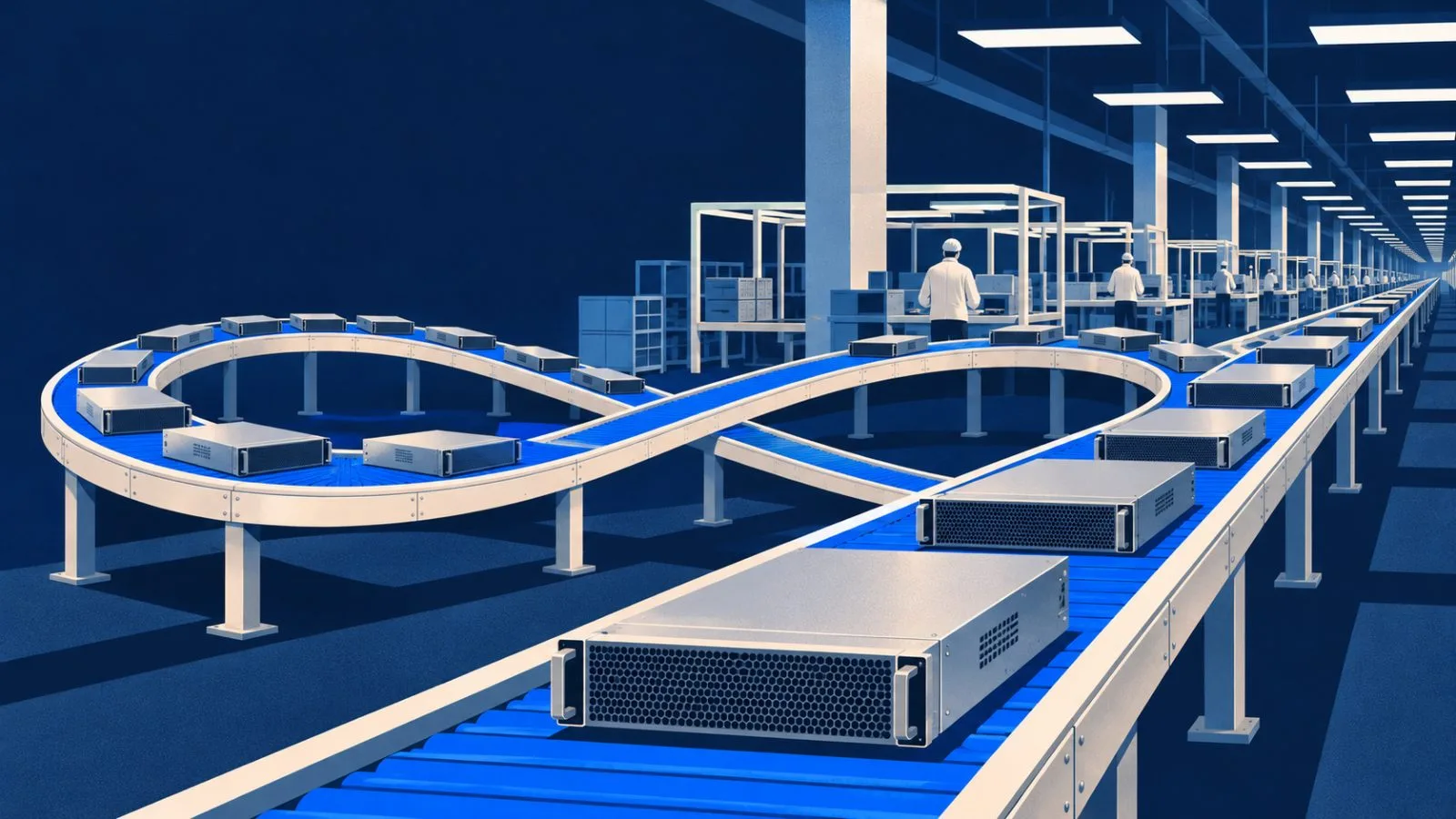
Taiwan’s AI server manufacturers may face slower memory-cost growth as Chinese cloud providers reduce some purchases, potentially easing pressure on margins even while North American demand keeps the market tight.
Chinese cloud service providers began reducing non-long-term-agreement server DRAM purchases in early fourth-quarter 2026. They also began reducing 2027 enterprise SSD orders in mid-fourth-quarter 2026.
The pullback reflects GPU shortages and elevated inventories among Chinese cloud companies. NAND Flash, the memory technology used in enterprise SSDs, is moving toward an oversupply phase.
DRAM prices are expected to rise modestly as the market stabilizes. The shift could slow component-cost growth for manufacturers, but it does not indicate broad price declines.
Taiwan’s server makers have continued to post strong revenue growth. Quanta Computer’s October revenue rose 104% from a year earlier, while Wistron’s increased 117.6%. Pegatron’s revenue climbed 59.6%, and Foxconn’s rose 45.7% to a record level.
Foxconn, Quanta Computer and Wistron rank among the top five global AI server suppliers. Their customers include major cloud operators expanding artificial-intelligence infrastructure, while North American cloud providers continue absorbing a large share of DRAM supply.
The strong revenue growth has not eliminated margin pressure. DRAM and high-bandwidth memory prices have risen significantly year over year. HBM is stacked memory used alongside AI accelerators, and its production remains expensive. The manufacturers generally operate high-volume, thin-margin businesses.
The companies have explored consignment arrangements to manage those costs. Under such an arrangement, a customer purchases key components such as memory and supplies them directly to the manufacturer, which assembles the server without carrying those component costs on its own books.
DRAM revenue is projected at approximately $1.15 trillion in 2027, while NAND revenue is projected at about $419 billion. North American hyperscalers continue buying aggressively, while Chinese buyers are pulling back because they cannot secure enough GPUs to use the memory.
John Kim
John Kim reports on the digital-asset business for TokenPost. Send corrections or tips to info@tokenpost.com.